

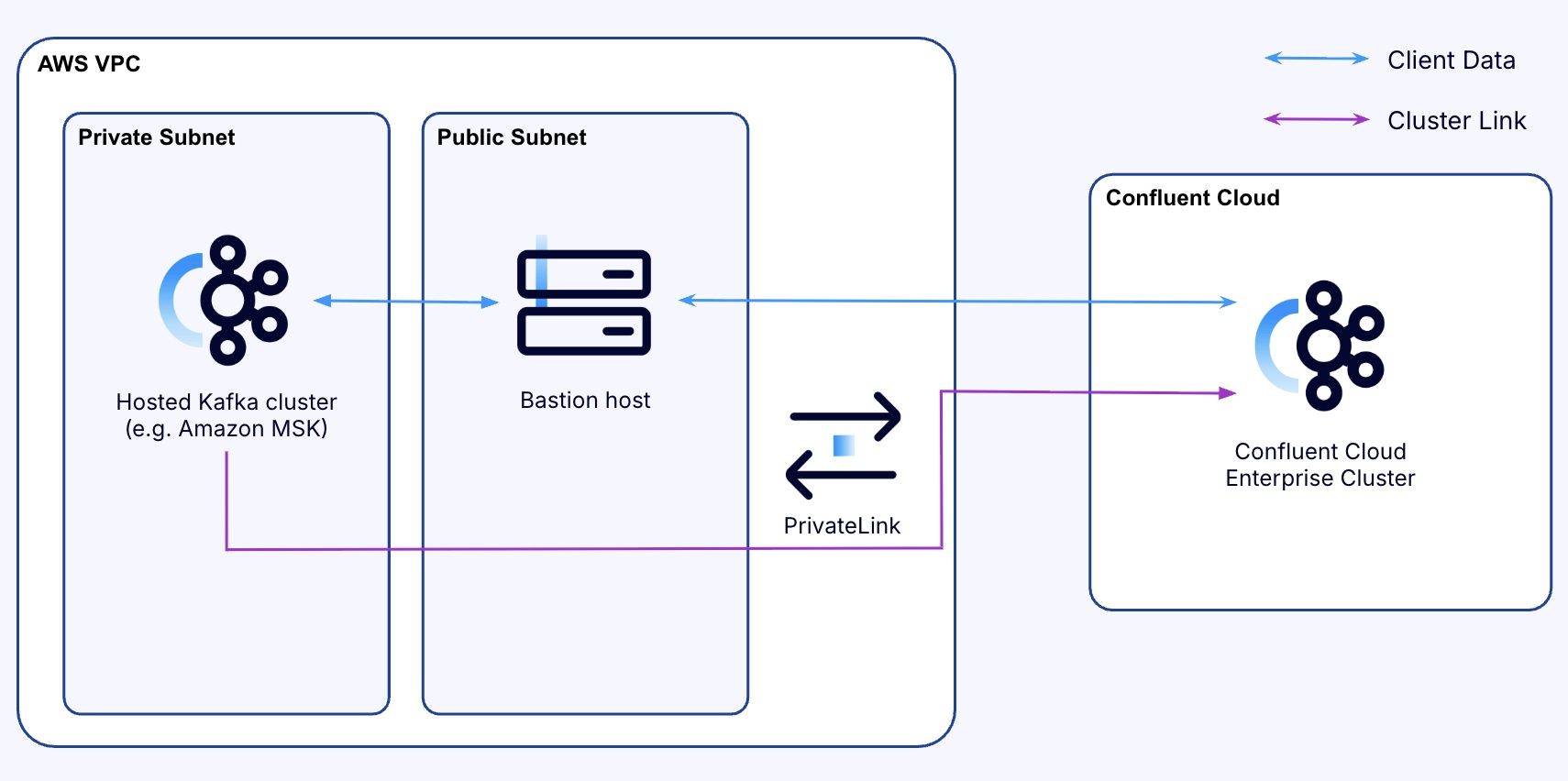
Why Migrating from Hosted Kafka to Confluent Cloud Is More Than Just a KRaft Upgrade

📷 Image source: images.ctfassets.net
The Crossroads for Kafka Users
Navigating the Shift from ZooKeeper to KRaft
For organizations running on hosted Apache Kafka services, a fundamental architectural shift is underway. The industry-wide migration from the legacy ZooKeeper-based consensus mechanism to the newer, simplified KRaft (Kafka Raft) mode is more than just a technical upgrade; it's a strategic inflection point. This transition forces a critical decision: continue managing this complex change in-house on a generic hosted platform, or leverage the moment to move to a fully managed, cloud-native service.
According to confluent.io, this migration window presents a unique opportunity. While other providers require you to navigate the KRaft transition yourself on their infrastructure, Confluent Cloud has operated on KRaft from its inception. This means migrating to Confluent Cloud isn't just adopting a new platform—it's sidestepping the entire operational burden of the KRaft migration process, which involves significant planning, execution, and validation risks.
The Hidden Burden of a Self-Managed KRaft Migration
The blog post from confluent.io outlines the non-trivial challenges of performing a KRaft migration on a standard hosted Kafka service. The process isn't a simple flip of a switch. It requires a carefully orchestrated multi-step procedure: creating a new KRaft-based cluster, migrating clients and data across, validating everything works, and then decommissioning the old ZooKeeper-based cluster.
Each step carries potential for downtime, data loss, or performance degradation if not executed perfectly. Teams must manage dual clusters during the cutover, handle client reconfiguration, and ensure transactional consistency. The report states that this DIY migration consumes valuable engineering time and attention that could be directed toward building core applications and business logic, rather than plumbing.
Confluent Cloud: Built Native on KRaft
A Foundation of Simplicity and Scale
In contrast to the migration headache, Confluent Cloud was engineered from the ground up using the KRaft consensus protocol. This native architecture is a core differentiator. There's no legacy ZooKeeper baggage to manage, migrate, or maintain. The platform benefits from KRaft's inherent advantages—such as a simpler mental model with a single type of server process and improved scalability for metadata operations—without the user ever needing to touch the underlying mechanics.
This foundational choice translates directly to operational benefits. According to the source, because Confluent Cloud runs KRaft natively, it can offer stronger default guarantees and more streamlined operations. For users, this means the sophisticated consensus layer simply becomes a reliable given, a stable foundation upon which to build data pipelines, not a system to be constantly tuned and nursed through a major version upgrade.
Beyond Consensus: The Full Managed Service Advantage
Migrating to Confluent Cloud during this industry transition unlocks benefits that extend far beyond the KRaft protocol itself. The source material emphasizes that Confluent Cloud is a complete data streaming platform, not just a hosted cluster. This encompasses critical enterprise features that are often add-ons or managed separately elsewhere.
Key among these is fully managed Kafka Connect for seamless data integration with hundreds of pre-built connectors, and Stream Governance (including a fully managed Schema Registry). These components are deeply integrated, providing a cohesive experience for governing data quality, ensuring compatibility, and building real-time integrations without managing yet another set of servers or open-source projects. The migration, therefore, becomes a leap in platform capability, not just a lateral move to a different host.
The Practical Migration Path
Leveraging MirrorMaker 2 for a Smooth Transition
So, how does the actual migration work? The confluent.io blog details a pragmatic approach using Apache Kafka's built-in MirrorMaker 2 tooling. This allows for a live, incremental migration where data is mirrored in real-time from the existing hosted Kafka cluster to a new Confluent Cloud cluster.
This strategy minimizes risk and downtime. Applications can continue writing to the source cluster while a mirroring process replicates topics, data, and configurations. Teams can then migrate consumer applications group by group, testing them against the data in Confluent Cloud before switching production traffic. Finally, producer applications are redirected to write directly to Confluent Cloud. This phased cutover, supported by robust tooling, turns a potentially monolithic migration event into a controlled, reversible procedure.
Quantifiable Operational Gains
What do you gain by moving? The article points to tangible operational metrics. By eliminating the need to self-manage the KRaft migration, organizations save countless hours of engineering planning and execution. More broadly, they offload the ongoing management of the Kafka infrastructure itself—including provisioning, scaling, security patching, monitoring, and troubleshooting.
This reduction in undifferentiated heavy lifting allows platform and data engineering teams to re-focus. Their mandate shifts from infrastructure custodians to enablers of real-time use cases. The managed service handles the 24/7 reliability, cross-zone availability, and performance tuning, freeing internal talent to work on differentiating projects that utilize the data stream, rather than maintaining the pipe.
Strategic Implications for Data Architecture
This decision transcends a single technology upgrade. Choosing to migrate to a fully integrated platform like Confluent Cloud during the KRaft era has long-term architectural consequences. It consolidates data-in-motion tools—streaming, connecting, and governing—into a single, supported service with a unified operational model.
According to the source, this consolidation reduces complexity sprawl. Instead of stitching together a hosted Kafka cluster, a separate connector fleet, and a self-managed Schema Registry, teams get a unified control plane. This simplifies security, compliance, and cost management. It creates a more resilient foundation for building event-driven microservices, real-time analytics, and modern data products, knowing the underlying platform is designed holistically for these workloads.
Making the Decision: Timing and Considerations
The confluent.io post, published on 2026-01-16T21:16:32+00:00, positions the current moment as strategically opportune. With the Apache Kafka community deprecating ZooKeeper, all hosted Kafka users are on the clock to migrate. The critical question is whether to invest internal resources in executing this complex procedural migration on a generic platform, or to treat the migration as a catalyst for adopting a more capable, fully managed cloud-native platform.
The evaluation hinges on more than just short-term migration cost. It involves assessing the total cost of ownership over the next 2-3 years, the value of developer productivity, and the strategic need for a robust, integrated streaming data platform. For many organizations, the path of migrating data once—from their hosted cluster directly to Confluent Cloud—proves to be the most efficient way to not only adopt KRaft but to fundamentally upgrade their entire real-time data capability.
#Kafka #ConfluentCloud #KRaft #DataStreaming #CloudMigration


