

Power Purchase Agreements: The Strategic Tool for Data Centers in an Era of Grid Instability

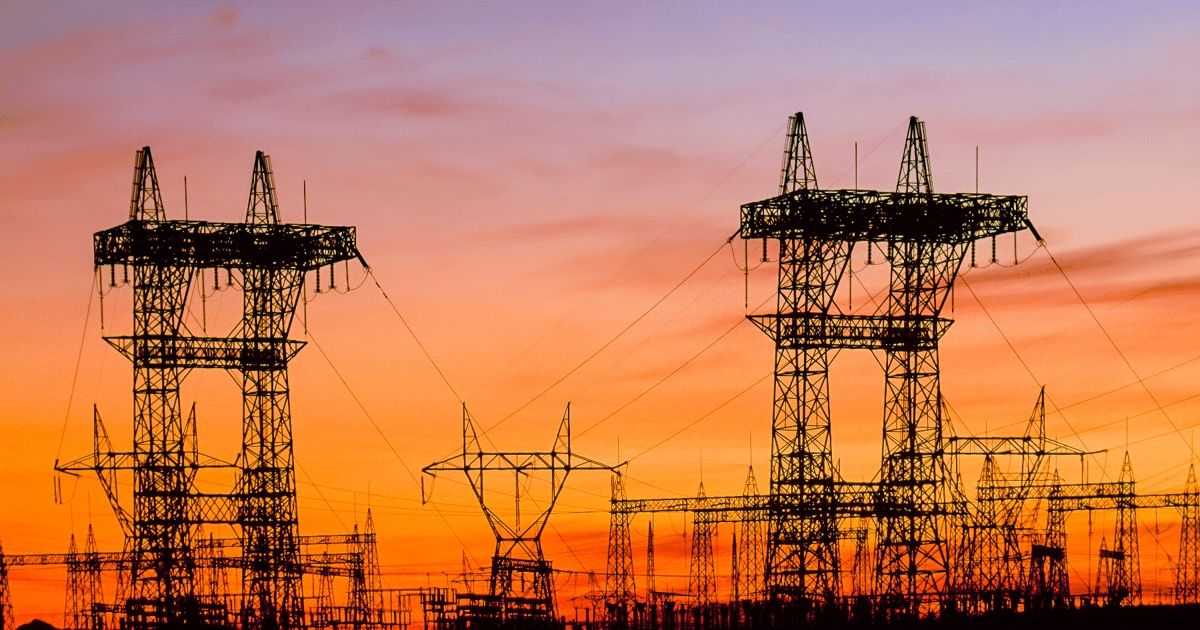
📷 Image source: eu-images.contentstack.com
Introduction: The Data Center Power Dilemma
Balancing Growth with Grid Reliability
The global data center industry faces a fundamental contradiction: its explosive growth in the age of artificial intelligence and cloud computing is colliding with increasingly fragile and constrained electricity grids. According to datacenterknowledge.com, this tension has pushed energy procurement from a back-office function to a core strategic priority for operators. The search for reliable, affordable, and increasingly sustainable power is reshaping where data centers are built and how they are financed.
One contractual instrument has moved to the forefront of this struggle: the Power Purchase Agreement, or PPA. A PPA is a long-term contract between an electricity generator and a consumer, typically a corporation. For data centers, these agreements offer a potential path to secure future power capacity, lock in energy costs, and meet corporate sustainability goals by directly sourcing renewable energy. Their relevance has skyrocketed alongside regional energy crises and soaring demand.
How PPAs Work: More Than Just Buying Electricity
The Mechanics of a Long-Term Energy Deal
A standard PPA functions as a financial and physical hedge. Physically, it guarantees that a specific new or existing power generation project—often a solar farm or wind facility—will deliver a set amount of electricity to the grid on the buyer's behalf. Financially, it locks in a price for that power's energy attributes over a decade or more, insulating the buyer from volatile wholesale market prices. For a data center operator signing a 15-year PPA, this creates long-term budget certainty for their largest operational expense.
The structure can vary significantly. In a virtual or financial PPA, no electrons flow directly to the data center. Instead, the generator sells power to the local grid, and the data center pays the difference between the market price and the PPA's strike price. This model allows facilities in regulated markets or areas with congested grids to support renewable projects elsewhere. A physical PPA involves direct delivery, often requiring complex arrangements with local utilities for transmission.
The Core Promise: Price Stability in a Volatile Market
Shielding Against Wholesale Price Spikes
The primary driver for data center PPA adoption is risk management. Electricity wholesale prices can be extremely volatile, influenced by fuel costs, weather events, and geopolitical instability. A data center with a predictable, large load cannot afford to have its operational viability hinge on daily market swings. By securing a fixed price through a PPA, operators transform a variable cost into a largely fixed one, which is crucial for financial modeling and investor confidence.
This stability became particularly valuable during the energy market disruptions following geopolitical conflicts in Europe, which caused natural gas and consequently electricity prices to surge globally. Operators with long-term PPAs active during this period were largely insulated from these spikes. According to analysis referenced by datacenterknowledge.com, this price hedge is now a top consideration for operators planning large-scale builds, especially for power-intensive AI compute clusters.
The Sustainability Mandate: Greening the Cloud
PPAs as a Pathway to Renewable Energy Goals
Beyond economics, PPAs are the primary tool for major cloud providers and colocation companies to meet ambitious public commitments to power their operations with 100% renewable energy. Corporations cannot simply claim to use 'green power' from the grid; they must procure Renewable Energy Certificates, or RECs, which represent the environmental attributes of one megawatt-hour of renewable generation. A PPA bundled with RECs provides incontrovertible proof that a company's demand caused new renewable energy to be built and added to the grid.
This 'additionality' is key. It moves beyond offsetting to actively decarbonizing the electricity system. For a data center operator, signing a PPA for a new solar project demonstrates tangible progress toward Environmental, Social, and Governance (ESG) targets to regulators, customers, and shareholders. The scale of data center demand is now significant enough to act as a major financier for new renewable energy projects worldwide, fundamentally changing the energy development landscape.
Navigating Complexities: Interconnection and Grid Congestion
When the Power Can't Reach the Rack
A major limitation of PPAs, especially physical ones, is their dependence on grid infrastructure. A data center in Northern Virginia may sign a PPA for a solar farm in Texas, but physically transmitting that power across multiple grid regions is technically impossible. Therefore, PPAs are most effective when the generation is within the same regional transmission organization or where virtual structures are used. Even then, local distribution grids near data center campuses are becoming severely congested.
This congestion creates a significant hurdle. An operator may have a stellar PPA for 200 megawatts of wind power, but if the local substation and transmission lines cannot handle an additional load of that size, the power is useless. Consequently, leading data center operators are now involved in funding grid upgrades themselves, working directly with utilities. This turns energy procurement into a capital-intensive infrastructure play, blurring the lines between a technology tenant and a power developer.
The Financial and Credit Hurdle
Not Every Operator Can Secure a Deal
PPAs are complex financial instruments that require strong creditworthiness. A wind farm developer entering a 12-year contract needs assurance that the buyer will be solvent for the duration. This inherently favors large, investment-grade corporations like hyperscale cloud providers (Amazon, Microsoft, Google) and major publicly-traded colocation firms. Smaller regional operators or private companies may struggle to access the PPA market on competitive terms, putting them at a strategic disadvantage.
To bridge this gap, aggregation models have emerged. Multiple smaller buyers can pool their demand to match the output of a single renewable project, achieving the scale needed for a viable PPA. Third-party intermediaries also offer standardized PPA products. However, these solutions add layers of complexity. The credit requirement fundamentally means that the tool best suited to navigate the energy crisis is not equally available to all players in the data center industry, potentially accelerating market consolidation.
Geographic Shifts: Following the Power
How PPAs Influence Data Center Site Selection
The pursuit of viable PPAs is actively redirecting data center investment flows. Traditional hubs like Northern Virginia and Silicon Valley face severe power constraints. Operators are now proactively scouting locations with abundant renewable resources (like solar-rich Texas or the wind-swept plains of the Midwest), available land, and amenable utilities. The PPA is no longer an afterthought; it is a prerequisite for site selection, often secured years before ground is broken on the data center itself.
This shift has global implications. Nordic countries with robust hydro and wind resources, such as Sweden and Norway, have seen a surge in data center investment partly driven by the availability of clean, coolable power under long-term agreements. Similarly, regions in Spain and Australia are attracting developers. This globalization of site selection, fueled by the search for stable power contracts, is decentralizing the world's digital infrastructure away from its traditional cores, with significant implications for latency, local economies, and energy markets.
Beyond Renewables: The Nuclear and Gas Question
Could PPAs Cover Baseload Thermal Power?
While most corporate PPAs today are for wind and solar, the debate around 'firm' baseload power is intensifying. Solar and wind are intermittent; they don't generate power 24/7. As data center loads become more constant, matching them with purely intermittent renewables requires massive overbuilding of generation and storage. This has led some industry voices to explore PPAs for other generation types, including next-generation small modular nuclear reactors (SMRs) and even natural gas plants with carbon capture.
Such a move would be controversial. A PPA for a gas plant, even an efficient one, would conflict with '100% renewable' pledges. However, proponents argue that true grid stability and reliability for mission-critical compute may require a mix. The structure of a PPA could, in theory, be applied to any generation source. Whether data center operators, under intense scrutiny for their ESG performance, will publicly embrace PPAs for non-renewable sources remains a critical open question for the industry's future energy mix.
The Innovation Frontier: PPAs for Storage and Hydrogen
Contracting for Grid Services and Future Fuels
Innovation in PPA structures is evolving to address the intermittency problem directly. Some advanced agreements now bundle solar generation with co-located battery storage. In this model, the PPA covers not only the solar energy but also the service of storing it and discharging it during evening peaks or cloudy periods. This turns the renewable project into a more reliable, dispatchable resource, increasing its value to the grid and the data center buyer.
Looking further ahead, pilot projects are exploring PPAs for 'green hydrogen'. In this scenario, a data center could sign a long-term contract for power from a dedicated renewable facility that primarily produces hydrogen via electrolysis. The hydrogen could then be used in fuel cells to generate backup or even primary power for the data center. While highly experimental and not yet economical, such models illustrate how the PPA framework is being stretched to solve the ultimate challenge: providing 24/7 carbon-free power to a relentless consumer.
Risks and Limitations: No Silver Bullet
Understanding the Downsides of Long-Term Contracts
PPAs are not a risk-free solution. Their long-term nature is a double-edged sword. If wholesale electricity prices fall significantly below the PPA strike price over the contract term, the buyer is locked into overpaying for power—a scenario known as 'congratulation risk'. While virtual PPAs mitigate some financial risk through settlement payments, they still represent a bet on future energy markets. The rapid decline in renewable energy costs over the past decade has, in some early cases, left buyers in this unfavorable position.
Other risks include counterparty risk (the generator developer going bankrupt), operational risk (the project underperforming), and regulatory risk. Government incentives for renewables can change, and market rules governing how virtual PPAs are settled can be altered by grid operators. A PPA requires extensive due diligence, legal review, and often a willingness to engage in complex financial derivatives to hedge the hedge itself. For all their benefits, PPAs demand sophisticated internal expertise that not all data center organizations possess.
The Global Landscape: A Patchwork of Opportunities
How PPA Viability Differs from Region to Region
The feasibility and structure of PPAs vary dramatically across the world's electricity markets. In deregulated markets like much of the United States, Australia, and parts of Europe, corporate PPAs are well-established instruments. In contrast, many markets in Asia and much of the United States that are under traditional cost-of-service regulation offer little to no room for direct corporate power purchasing. In these regions, data centers must work exclusively with the incumbent utility, lobbying for more renewables and hoping for stable tariffs.
This global patchwork forces multinational data center operators to develop a portfolio of energy strategies. In one country, they may sign a virtual PPA for a Nordic wind farm. In another, they may invest in on-site solar panels and batteries. In a third, they may have to partner with the state utility to build a dedicated substation. This inconsistency adds operational complexity but also highlights that the PPA, while powerful, is just one tool in a broader arsenal needed to secure power in the 21st century.
Perspektif Pembaca
The strategic use of Power Purchase Agreements highlights a fundamental shift: data centers are no longer just consumers of power but are becoming active architects of the future energy grid. Their financial heft and constant demand give them unprecedented influence over which generation gets built and where.
What should be the primary responsibility of large data center operators in this new role? Should their focus remain strictly on securing the cheapest, most reliable power for their own operations, or does their market power come with a broader obligation to accelerate the grid's decarbonization and stability for everyone? We invite your perspective based on your experience in technology, energy, or as an observer of digital infrastructure.
Share your view: Do you see data centers primarily as a catalyst for a cleaner grid, a potential strain on existing resources, or a neutral force simply following the most pragmatic economic path?
#DataCenter #PPA #RenewableEnergy #EnergyManagement #GridStability


