

NBC Sports and Nippon TV Deploy AI to Let Viewers Follow Individual Athletes in Real Time

📷 Image source: platform.theverge.com
A New Era of Personalized Sports Broadcasting
AI-powered tracking shifts the viewing experience from the game to the player
Imagine watching a football game and, with a tap on your phone, isolating the camera feed to follow only your favorite quarterback's every move, from snap to throw. This is no longer a futuristic concept but a new broadcasting reality. According to a report from theverge.com, NBC Sports and Japan's Nippon Television are implementing a sophisticated AI system that allows mobile viewers to track individual athletes in real-time during live events.
The technology, developed by the AI and graphics company Vizrt Group under the product name 'Viz Trick' and 'AIDI', represents a fundamental shift in sports consumption. It moves the focus from the traditional wide-angle broadcast of the entire field of play to a personalized, athlete-centric stream. The system was first tested during Nippon TV's coverage of Japan's high school baseball tournament and is now being integrated by NBC Sports for its upcoming football and golf coverage in the United States.
How the AI Player Tracking Technology Actually Works
From broadcast feed to personalized stream
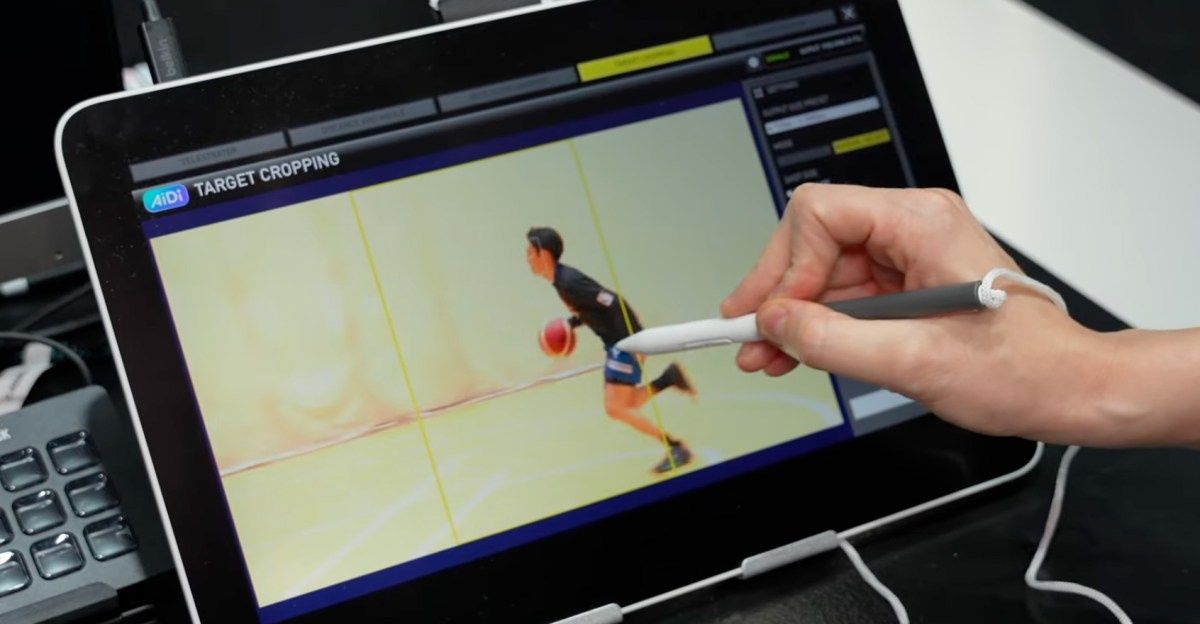
The process begins with the standard live broadcast feed. The AI, specifically the 'AIDI' computer vision engine, analyzes this video in real time. It doesn't just identify players; it tracks their skeletal movements and trajectories across the field or course. This data is then processed by the 'Viz Trick' graphics system, which can instantly generate a new, isolated video stream focused on a single tracked athlete.
For the viewer using the NBC Sports or Nippon TV mobile app, this translates to a simple interface. During a live game, they can select a star player from an on-screen menu. The app then switches their view to a dedicated feed that keeps that athlete perfectly framed, regardless of where they move on the field. The background and other players may become slightly blurred, ensuring the chosen subject remains the visual priority. This technical feat happens with what the companies describe as a 'sub-second' delay from the main broadcast, a critical factor for maintaining the live excitement of sports.
The Driving Forces Behind the Personalized Viewing Push
This innovation is a direct response to two major trends in media consumption. First is the dominance of mobile viewing. People are increasingly watching sports on smartphones and tablets, screens where the details of a wide-field broadcast can be hard to appreciate. A personalized feed solves this by delivering a clear, focused narrative.
The second force is the competitive landscape of streaming services and social media. Platforms like YouTube and TikTok have conditioned audiences to have direct control over their viewing experience. Traditional sports broadcasts, by comparison, can feel passive. By offering viewer-directed camera angles, networks like NBC Sports aim to provide an interactive, engaging experience that mirrors the control found on digital platforms, giving fans a reason to stay within their official app.
Beyond Football: Golf and the Challenge of Fast-Paced Sports
Testing the AI's limits across different games
While the initial highlight is its application in American football, NBC Sports also plans to deploy the technology for golf coverage. Here, the use case is different but equally compelling. Viewers could choose to follow a specific golfer like Rory McIlroy through all 18 holes, seeing every drive, iron shot, and putt without the broadcast cutting away to other players. This creates a continuous, documentary-style narrative for a single competitor's round.
However, the report from theverge.com notes that sports with extremely fast and chaotic motion, such as basketball or hockey, present a greater technical challenge. The rapid direction changes and constant player collisions can be more difficult for the AI to track flawlessly without occasional errors. The initial rollout is therefore focused on sports with more predictable player movement patterns or where athletes are more spatially separated, allowing the system to prove its reliability.
The Business of Attention: Data, Advertising, and Fan Engagement
The introduction of this technology is not solely a viewer convenience; it's a strategic business move. The data generated is immensely valuable. Broadcasters can now see exactly which athletes fans choose to watch most, providing concrete metrics on player popularity that go beyond jersey sales or social media mentions.
This data opens new avenues for targeted advertising and sponsorship integration. An advertisement could theoretically be tailored to appear within the personalized stream of a specific athlete, creating a powerful link between star and sponsor. Furthermore, by offering a unique feature that social media clips and unauthorized streams cannot replicate, NBC Sports and Nippon TV are building a value proposition for their official platforms, aiming to deepen fan engagement and retain subscribers in a fragmented media world.
The Japanese Prototype: High School Baseball and Cultural Nuances
Where the technology was first unveiled
The real-world testing ground for this AI tracking was culturally significant. Nippon Television first used it during the National High School Baseball Championship, a massively popular event in Japan. The choice was strategic. The tournament has a passionate fanbase that often follows specific schools or standout pitchers with fervent dedication.
Offering a personalized feed for a star pitcher, for example, allowed fans to immerse themselves in that player's performance and story. This successful trial demonstrated not just the technical viability but also the emotional resonance of the feature. It proved that the technology could enhance the narrative depth of a broadcast, catering to the deep personal connections fans form with individual athletes, a principle that translates directly to NFL stars or top golfers in the U.S. market.
What This Means for the Future of Sports Production
The long-term implications extend far beyond a nifty app feature. This technology challenges the very role of the television director. Historically, the director's vision—choosing which camera angle to show and which story to tell—defined the broadcast for everyone. Now, the viewer can assume that editorial control for themselves.
This could lead to a future where the main broadcast serves as a backbone signal, with a suite of AI-generated alternative feeds available. The 'default' broadcast might become just one option among many. It also raises questions about the communal viewing experience; if everyone is watching a different player, does the shared cultural moment of a big play disappear? Conversely, it empowers fans to engage with the sport on their own terms, potentially deepening their understanding and appreciation for the roles of individual athletes within the team framework.
Availability and the Road Ahead for AI in Broadcasting
According to the report, the feature is being integrated into the NBC Sports mobile app for the upcoming football season and select golf tournaments. It will not be available on traditional linear television broadcasts, as it relies on the interactive capabilities and processing of a connected device.
The development signals a clear investment in AI as a core production tool, not just a post-production gimmick. As the computer vision algorithms improve, their application will likely expand. The next steps could include real-time advanced statistics overlaid on a personalized feed, or even AI-generated commentary tailored to the athlete being followed. The partnership between NBC Sports and Nippon Television, leveraging the Vizrt Group's technology, marks a pivotal moment where artificial intelligence moves from enhancing the picture to fundamentally redefining the perspective of live sports. As these tools evolve, the question may no longer be 'What game are you watching?' but 'Who are you watching?'
#AI #SportsBroadcasting #NBCSports #Innovation #LiveStreaming


