

Microsoft CEO Warns AI Must Prove Its Worth to Society or Risk a Backlash

📷 Image source: cdn.mos.cms.futurecdn.net
A Stark Warning from the Top
Satya Nadella on the Fragile Social License for Artificial Intelligence
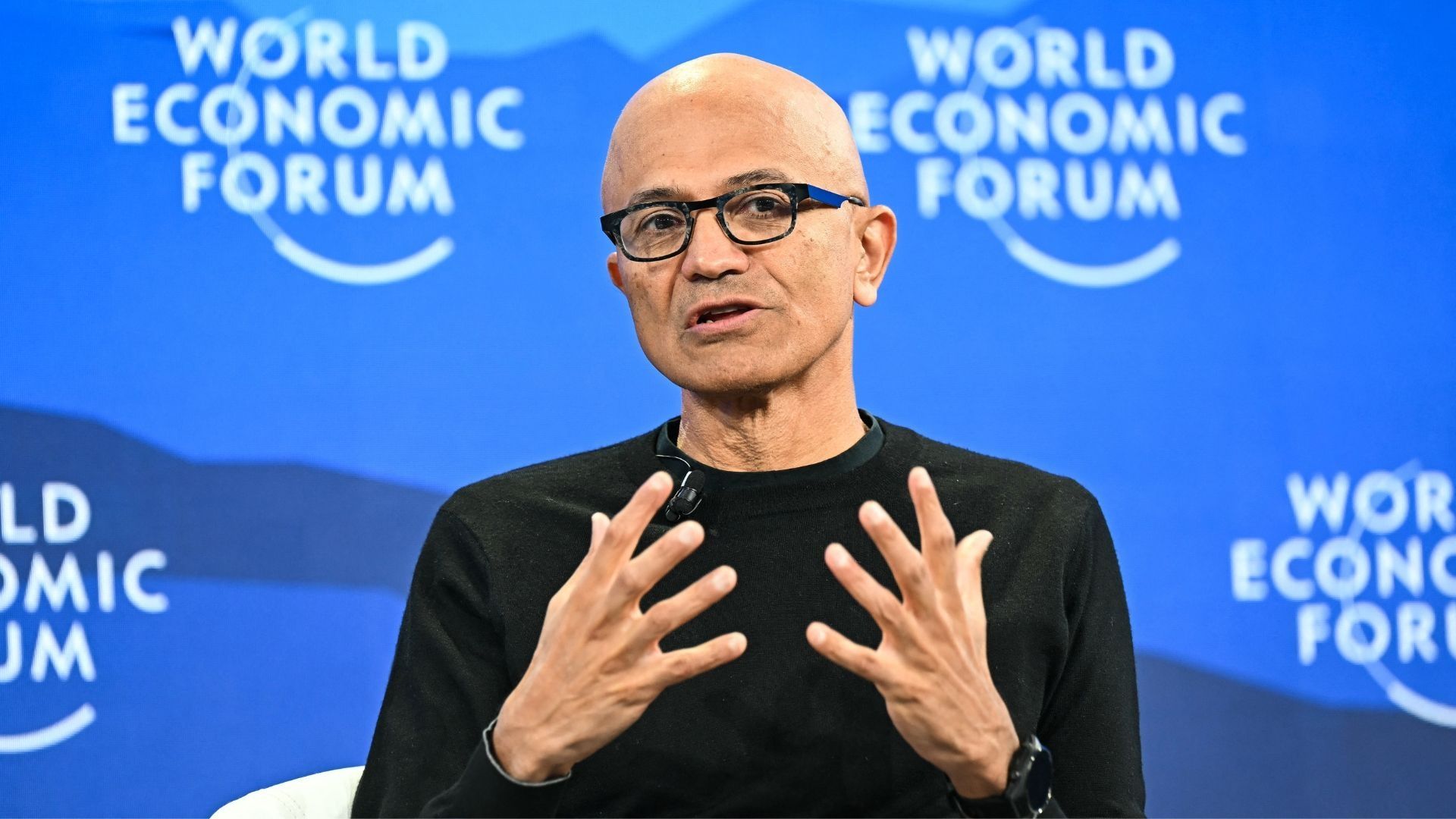
In a candid assessment of the artificial intelligence boom, Microsoft CEO Satya Nadella has issued a stark warning: the technology must demonstrate tangible, widespread benefits for society, or it risks rapidly losing its 'social permission' to operate. Speaking at the World Economic Forum in Davos, Nadella framed the current AI surge not just as a technological race, but as a test of its fundamental utility to humanity.
According to tomshardware.com, Nadella argued that for AI to avoid becoming a speculative bubble that ultimately bursts, it must move beyond hype and show concrete value for a broad cross-section of people. The Microsoft CEO's comments strike at the heart of growing public and regulatory scrutiny surrounding AI's economic displacement, environmental costs, and potential for misuse.
The Precarious Concept of 'Social Permission'
Nadella's use of the term 'social permission' is a powerful framing device. It suggests that the advancement of a transformative technology is not an inevitable right, but a privilege granted by the public—a privilege that can be revoked. This concept hinges on a perceived social contract where innovation is tolerated, and even encouraged, so long as its net impact is viewed as positive for the common good.
When that balance tips, or when the benefits are seen as accruing only to a technological elite, public sentiment can sour quickly. History offers precedents, from the backlash against genetically modified organisms in some regions to ongoing debates about social media's impact on mental health and democracy. Nadella's warning implies that AI is now navigating this same treacherous terrain, where technical achievement alone is insufficient to guarantee long-term acceptance.
Beyond the Hype: The 'Bubble' Risk in AI Investment
Drawing Parallels to Past Technological Frenzies
The Microsoft CEO explicitly linked the need for broader impact to the financial sustainability of the AI sector. 'We have to have real benefits for this to not be a bubble,' he stated, as reported by tomshardware.com. This draws a direct line from public perception to market economics. A 'bubble' in this context refers to a cycle of inflated valuations and exuberant investment driven more by speculation and fear of missing out than by proven, scalable business models and measurable productivity gains.
Nadella’s comment can be seen as an allusion to past tech cycles, such as the dot-com bubble of the late 1990s. In that era, countless companies with 'dot-com' in their name saw valuations skyrocket based on potential rather than profit, leading to a dramatic market correction. The implication is clear: if AI fails to deliver widespread, demonstrable value beyond niche applications and pilot projects, the current torrent of investment could dry up, leading to a painful consolidation and loss of confidence that could stall progress for years.
Microsoft's Dual Role: Champion and Stakeholder
Nadella's warning carries particular weight given Microsoft's position. The company is not a neutral observer but a central architect and primary beneficiary of the current AI wave. Through its multi-billion dollar partnership with OpenAI and its integration of Copilot AI across its entire suite of products—from Windows and Office to Azure cloud services and developer tools—Microsoft has bet its future on AI's success.
Therefore, his call for broader impact is also a strategic imperative for his own company. Microsoft's long-term commercial success with AI depends on its adoption by millions of businesses and billions of users. If a public or regulatory backlash slows that adoption, or if the technology is perceived as not delivering enough value for its cost, Microsoft's ambitious plans could be derailed. His speech, therefore, serves as both a societal caution and a corporate north star.
Tangible Benefits: What Does 'Wider Impact' Actually Look Like?
While Nadella did not provide a exhaustive list, the report from tomshardware.com suggests the vision involves moving beyond flashy demos. 'Wider impact' likely encompasses several key areas. In healthcare, it could mean AI assistants that genuinely reduce administrative burden for doctors, allowing more patient time, or diagnostic tools that improve accuracy in underserved regions. In education, it could mean personalized tutors that help close learning gaps, not just automate grading.
In the broader economy, the test will be whether AI acts as a true productivity multiplier for small businesses and individual creators, not just a cost-saving tool for large corporations that leads to workforce reduction. The technology must also be accessible; benefits concentrated solely within well-funded tech companies or wealthy nations would contradict the very 'wider impact' Nadella deems essential. The challenge is moving from proofs-of-concept that make headlines to deployed solutions that improve everyday lives and work at scale.
The Counter-Narrative: AI's Current Perceived Shortcomings
To understand the urgency behind Nadella's message, one must consider the growing counter-narrative. Critics point to several issues that could erode 'social permission.' The enormous computational power required for large language models raises serious environmental concerns about energy and water usage. Fears about job displacement in creative, administrative, and analytical fields are widespread, often stoking anxiety before concrete retraining programs are in place.
Furthermore, high-profile errors or 'hallucinations' by AI chatbots undermine trust in their reliability for critical tasks. There are also deep worries about the proliferation of sophisticated disinformation and fraud enabled by AI-generated audio and video. Each of these factors contributes to a reservoir of public skepticism that Nadella acknowledges must be addressed through positive, tangible outcomes, not just public relations.
The Path Forward: Responsibility and Measured Ambition
Nadella's remarks suggest that the industry's path forward requires a more measured and responsible form of ambition. The race cannot solely be about releasing the most powerful model with the most parameters; it must also be about building the most trustworthy, useful, and broadly applicable tools. This involves continued, serious investment in AI safety and alignment research to ensure systems behave as intended.
It also implies a need for transparent collaboration with policymakers to shape sensible regulation that mitigates risks without stifling innovation. Perhaps most importantly, it calls for a focus on human-AI collaboration—designing AI that augments human capabilities and decision-making rather than seeking to fully replace them. This cooperative model may be more palatable to society and more sustainable in the long run.
A Defining Moment for the AI Industry
Satya Nadella's intervention at Davos marks a potential inflection point in the AI discourse. By openly discussing 'social permission' and the risk of a bubble, he is elevating concerns that are often whispered in boardrooms or shouted by critics into the mainstream of industry leadership conversation. The message is that technologists can no longer operate in a vacuum, assuming society will automatically embrace what they build.
The coming years will test whether the AI industry can pivot from a focus on raw capability to a focus on demonstrated, equitable value. The success of this pivot will determine not only the financial fate of countless companies but also the nature of the technology's legacy. Will AI be remembered as a transformative tool that lifted broad swathes of the global economy, or as an overhyped investment that concentrated power and benefits? According to the CEO of one of its biggest backers, the answer hinges on the industry's ability to prove its worth, widely and quickly, before public patience wears thin. This report is based on information from tomshardware.com, 2026-01-21T13:26:41+00:00.
#AI #Microsoft #Technology #Society #Innovation


