

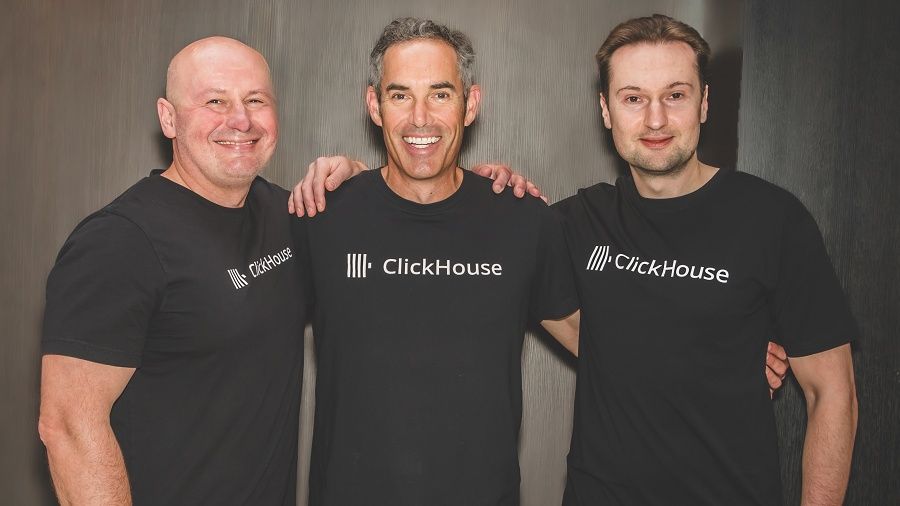
ClickHouse Secures Major Funding and Acquires Langfuse, Signaling Strategic Shift Toward AI-Native Data Infrastructure

📷 Image source: d15shllkswkct0.cloudfront.net
A Major Inflection Point for Open-Source Analytics
Funding and Acquisition Announcement
ClickHouse Inc., the company behind the popular open-source analytical database, announced a dual strategic move on January 16, 2026, that signals its ambition to become a central platform for artificial intelligence workloads. According to siliconangle.com, the company has raised $400 million in a new funding round and simultaneously acquired Langfuse, a startup specializing in AI observability and evaluation tools. This substantial capital injection and strategic purchase mark a pivotal moment for the company as it seeks to evolve beyond its core database technology.
The announcements, reported by siliconangle.com on 2026-01-16T21:49:01+00:00, come at a time when enterprises are grappling with the complex data demands of generative AI and large language models. ClickHouse's database is renowned for its speed in processing massive volumes of data, a capability increasingly critical for training and running AI applications. The acquisition of Langfuse directly addresses the next layer of the challenge: understanding, monitoring, and improving the performance of AI applications once they are deployed in production environments.
Decoding the $400 Million Funding Round
Investor Confidence and Valuation Implications
The $400 million (approximately €367 million) funding round represents one of the most significant single investments in a data infrastructure company in recent years. While siliconangle.com's report did not disclose the specific lead investors or the post-money valuation, a raise of this magnitude underscores strong investor belief in ClickHouse's market position and future trajectory. Such capital is typically earmarked for aggressive product development, global expansion, and strategic acquisitions—the last of which the company has already executed with Langfuse.
This financial backing provides ClickHouse with a substantial war chest to compete against larger, established cloud data warehouse vendors and other open-source rivals. The funds will likely accelerate the integration of Langfuse's technology, fuel research into AI-optimized database features, and expand sales and marketing efforts worldwide. In a competitive landscape, this capital advantage allows ClickHouse to scale operations without the immediate pressure of profitability, focusing instead on capturing market share in the burgeoning AI data platform sector.
Who is Langfuse and What Does It Do?
Bringing Observability to the AI Stack
Langfuse is a startup focused on AI observability, a discipline that involves tracking, analyzing, and debugging the performance of AI-powered applications. In practical terms, this means tools that allow developers and data scientists to trace how prompts flow through an application, log the outputs of large language models, evaluate the quality and cost of responses, and identify issues like hallucinations or unexpected behavior. For companies deploying customer-facing AI chatbots, automated agents, or content generation tools, such observability is non-negotiable for maintaining reliability and cost control.
Prior to the acquisition, Langfuse operated as an independent company building tools to address the 'black box' nature of many AI systems. Its technology helps teams understand not just if an AI application is up or down, but how well it is performing its intended task. This includes monitoring metrics like token usage (which directly correlates with cost), latency, and custom quality scores. By bringing Langfuse in-house, ClickHouse is not just acquiring a product; it is acquiring critical expertise in a domain adjacent to, but distinct from, traditional data management.
The Strategic Rationale Behind the Acquisition
From Data Storage to AI Workflow Management
The acquisition is a clear statement of vertical integration. ClickHouse's core strength is ingesting and querying vast datasets at high speed—a perfect engine for storing the logs, traces, and outputs generated by AI applications. Langfuse provides the layer that makes sense of that data specifically for AI teams. Together, they aim to offer a unified platform where the data generated by AI is stored, managed, and analyzed within the same ecosystem where the AI application's performance is evaluated and optimized.
This move positions ClickHouse to serve the entire AI development and operational lifecycle. A developer could use ClickHouse to store training data, then use the integrated Langfuse capabilities to monitor the model in production, storing all traces back into ClickHouse for historical analysis and retraining. This creates a compelling, sticky product suite that reduces the need for companies to stitch together multiple disparate tools from different vendors, potentially simplifying architecture and reducing total cost.
The Evolving Competitive Landscape
ClickHouse's Position Among Giants and Startups
ClickHouse's strategic shift occurs within a highly competitive arena. It faces competition on multiple fronts: from cloud-native analytical databases like Snowflake, Google BigQuery, and Amazon Redshift; from other open-source players like Apache Doris and StarRocks; and now, by entering the AI observability space, from specialized startups like Weights & Biases, Arize AI, and WhyLabs. The integrated approach of combining a high-performance database with AI tooling is a distinct bet that end-users want a more consolidated stack.
The competitive response from larger cloud providers will be a key area to watch. They possess the resources to build or buy similar observability features and deeply integrate them with their own data platforms. ClickHouse's challenge will be to leverage its open-source community, its reputation for raw performance, and now its first-mover advantage in this specific combination of technologies to carve out and defend a significant market position. Its open-source roots may also appeal to companies wary of vendor lock-in with major hyperscalers.
Technical Integration Challenges and Opportunities
How the Pieces Will Fit Together
A critical phase following the announcement will be the technical integration of Langfuse's observability platform with the ClickHouse database. The ideal outcome is a seamless experience where observability data is automatically stored in an optimized ClickHouse schema, and Langfuse's analysis tools can query that data with minimal latency. This requires deep engineering work to ensure the combined product is more than the sum of its parts—it must be a cohesive, high-performance unit.
Opportunities for innovation abound. ClickHouse could introduce new database functions or table engines specifically designed for AI telemetry data, enabling even faster aggregation and analysis of metrics like token consumption per user or prompt performance over time. Furthermore, the integration could lead to novel features, such as using ClickHouse's analytical power to automatically detect drifts in AI model behavior by analyzing historical trace data stored within itself. The success of the acquisition will hinge on the execution of this integration roadmap.
Implications for the Open-Source Community and Developers
Balancing Commercial and Community Interests
As a company built on an open-source core, ClickHouse must carefully manage how these new, likely commercial features interact with its free offering. The core ClickHouse database will remain open source, but advanced AI observability features stemming from Langfuse technology may be offered under a commercial or enterprise license. This is a common model but requires transparent communication to maintain the trust and engagement of the developer community that contributed to the project's popularity.
For developers, the combined offering promises a more streamlined toolkit. Instead of deploying a separate observability stack that writes to yet another database, they could leverage a native integration. This could lower the barrier to entry for implementing robust AI monitoring, especially for small to mid-sized teams. However, the community will be watching closely to ensure that the open-source project continues to receive strong investment and that valuable new innovations eventually trickle down to the community edition, not just the commercial product.
Global Market Context and Adoption Drivers
Why This Move Matters Worldwide
The drive toward AI integration is a global phenomenon, not confined to Silicon Valley. Enterprises in Europe, Asia, and elsewhere are on similar journeys to operationalize AI. ClickHouse's strategy, therefore, addresses a worldwide need for performant and observable AI infrastructure. Regions with strict data sovereignty laws may find an open-source-based, vendor-neutral platform particularly appealing compared to relying solely on American cloud giants.
Adoption will be driven by the tangible pain points the integrated platform solves: the high and unpredictable costs of running generative AI at scale, the difficulty in debugging poor or erratic outputs, and the complexity of managing multiple data pipelines for AI training and operations. If ClickHouse and Langfuse can demonstrably reduce these frictions, they stand to gain customers across diverse industries and geographies. The $400 million in funding provides the fuel for a global sales and support expansion to capture this international demand.
Potential Risks and Unanswered Questions
Navigating Uncertainty in a Fast-Moving Field
Despite the promising strategy, risks remain. The field of AI application development is rapidly evolving, and the specific tools and practices for observability are still being standardized. ClickHouse is making a bet on a particular vision of the AI stack, which could be challenged by new architectural paradigms. Furthermore, integrating two different company cultures and technology stacks is notoriously difficult, and the promised synergies may take longer to realize than anticipated, potentially losing momentum.
The siliconangle.com report leaves several questions unanswered. The specific financial terms of the Langfuse acquisition were not disclosed. It is also unclear how the existing Langfuse customer base will be transitioned and what the immediate product roadmap entails. Additionally, while the funding round is substantial, the burn rate for competing at this scale is high, and the pressure to deliver growth that justifies the investment will be immense. The company must execute flawlessly on both product and business fronts to mitigate these risks.
A New Chapter for Data-Intensive AI
Redefining the Infrastructure Layer
The dual announcement fundamentally redefines ClickHouse's ambition. It is no longer positioning itself solely as the world's fastest analytical database. It is now articulating a vision to be the foundational data layer for the AI era—a platform that not only stores the data that fuels AI but also provides the essential tools to manage and refine the AI applications themselves. This elevates its competitive narrative from one about query speed to one about enabling responsible, efficient, and scalable AI deployment.
This move reflects a broader industry trend where infrastructure software companies are expanding their horizons to capture more of the application development value chain. By doing so, ClickHouse increases its strategic importance to customers. If successful, the company could establish a new category: the AI-native data platform, where data management and AI operations are intrinsically linked. The coming months will be critical as the market evaluates the first fruits of this significant strategic bet.
Perspektif Pembaca
The integration of AI observability directly into a core data platform represents a significant shift in how companies might build and manage intelligent applications. This approach prioritizes a unified, vertically integrated stack over a collection of best-of-breed point solutions.
What has been your experience? For those involved in developing or deploying AI applications, do you see greater value in a consolidated platform that handles both data and observability, or do you prefer the flexibility of assembling specialized, independent tools? Share your perspective based on your technical or organizational challenges.
#ClickHouse #AI #DataInfrastructure #Funding #Database


