

NASA’s Roman Space Telescope Set to Detect 100,000 Cosmic Explosions in Unprecedented Survey

📷 Image source: nasa.gov
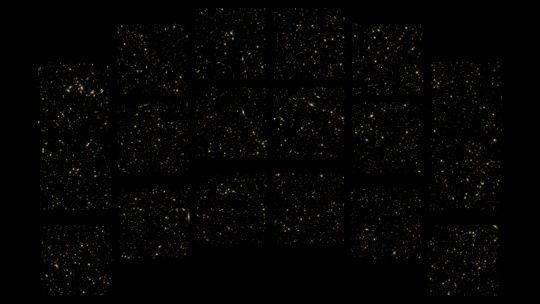
NASA’s Nancy Grace Roman Space Telescope, slated for launch in 2027, is poised to revolutionize our understanding of cosmic explosions. According to a recent announcement, a single survey conducted by the telescope could uncover as many as 100,000 transient events—brief but violent stellar phenomena such as supernovae, kilonovae, and tidal disruption events. The Roman Space Telescope’s Wide Field Instrument (WFI) will enable it to scan vast swaths of the sky with remarkable precision. Unlike other telescopes that focus on narrow regions, Roman’s broad yet detailed observations will allow scientists to capture fleeting cosmic events that might otherwise go unnoticed. Researchers estimate that the telescope could detect 10 times more supernovae than any previous mission, providing an unparalleled dataset for studying the life cycles of stars and the expansion of the universe. A key focus will be Type Ia supernovae, which serve as 'standard candles' for measuring cosmic distances. By tracking these explosions, astronomers hope to refine calculations of the Hubble constant, a value that describes the rate of the universe’s expansion—a topic currently mired in discrepancies between different measurement methods. Additional sources, including a report from Space.com, highlight that Roman’s infrared capabilities will also allow it to peer through cosmic dust, revealing explosions obscured in other wavelengths. This could shed light on poorly understood phenomena like the mergers of neutron stars, which produce gravitational waves and heavy elements like gold and platinum. The mission’s findings may not only advance astrophysics but also help unravel mysteries surrounding dark energy, the enigmatic force accelerating the universe’s expansion. With its unprecedented scope, the Roman Space Telescope promises to open a new chapter in time-domain astronomy.


