

Beyond the Dashboard: How Infrastructure Management is Shifting from Manual Control to Autonomous Orchestration

📷 Image source: imgix.datadoghq.com
The Vanishing System Administrator
A New Era of Autonomous Infrastructure
The traditional image of a system administrator, hunched over a terminal, manually provisioning servers and troubleshooting alerts, is rapidly fading into obsolescence. In its place, a new paradigm is emerging where infrastructure is not merely managed but autonomously orchestrated. This shift represents a fundamental change in how organizations interact with the complex digital backbones that power modern applications and services.
According to datadoghq.com, this evolution is being driven by the launch of tools like Datadog Infrastructure Management, announced on December 4, 2025. The core proposition is to move beyond simple monitoring and alerting. Instead, the goal is to create a system that can understand the desired state of an organization's entire technology stack—from cloud instances and containers to databases and serverless functions—and automatically take corrective actions to maintain it, all without human intervention.
From Observability to Actionability
Closing the Loop Between Insight and Execution
For years, the focus in IT operations has been on achieving observability—gaining deep, correlated insights into system performance and health. Platforms have excelled at collecting terabytes of telemetry data, visualizing it on dashboards, and firing alerts when thresholds are breached. However, this model still leaves a critical gap: the human in the loop must interpret the alert, diagnose the problem, and manually execute a remediation step.
Infrastructure Management, as described by datadoghq.com, aims to close this loop. It seeks to transform a platform from a passive observer into an active participant. The system uses the vast pool of observability data not just to inform humans, but to fuel automated decision-making engines. This represents a significant leap from telling teams what is wrong to empowering software to fix it proactively, fundamentally altering the incident response timeline.
The Engine Room: How Automated Remediation Works
Policy-Driven Governance and Intelligent Triggers
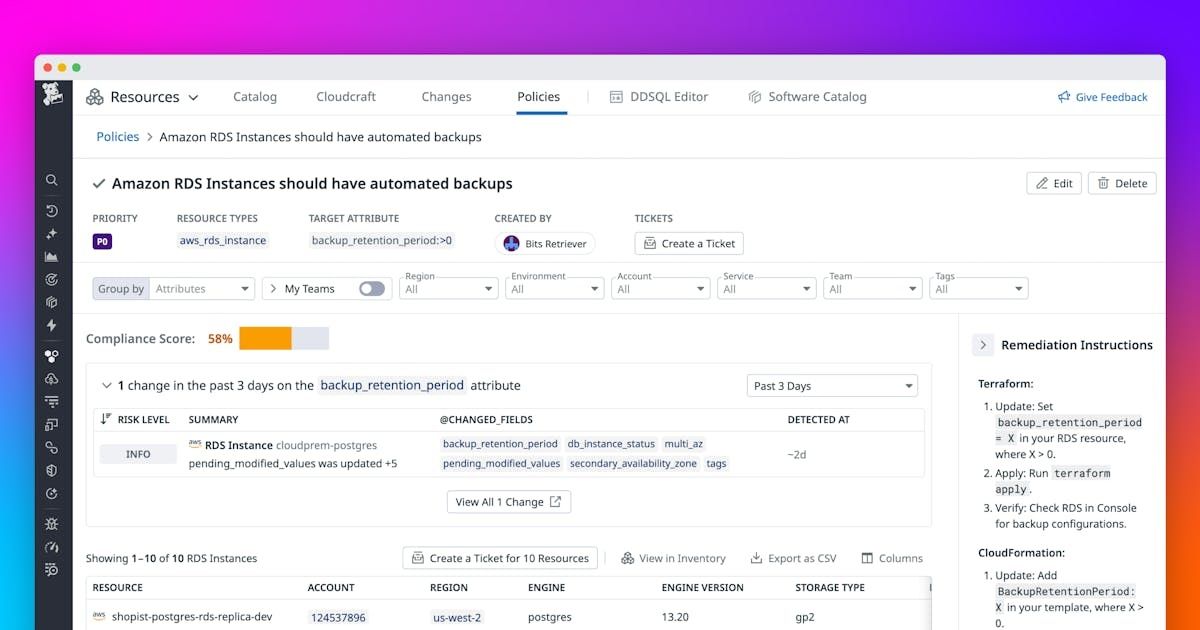
The mechanism behind this automation hinges on two core concepts: policies and triggers. A policy, in this context, is a declarative statement of a desired infrastructure state or a rule that must not be violated. For example, a policy could mandate that all production databases must have encryption-at-rest enabled, or that any compute instance with sustained CPU usage above 80% for ten minutes should automatically scale horizontally.
Triggers are the conditions that prompt the system to evaluate and enforce these policies. A trigger could be a specific alert from a monitoring tool, a scheduled scan, or a change event in the infrastructure itself. When a trigger fires, the system assesses the relevant policies. If a violation or desired action is identified, it then executes a pre-defined workflow—such as restarting a service, scaling resources, or even rolling back a faulty deployment—without requiring a human to click a button.
The Global Imperative for Automation
Scaling Complexity and the 24/7 Digital Economy
The push toward autonomous infrastructure is not a niche trend but a global response to universal pressures. Organizations worldwide are operating distributed, microservices-based applications that generate staggering complexity. A single user transaction might traverse dozens of services across multiple cloud regions and data centers. Manually managing this interconnected web is increasingly impractical and prone to human error.
Furthermore, the expectation for digital services to be available continuously, across all time zones, makes the traditional follow-the-sun support model insufficient. Automated remediation provides a consistent, instantaneous response capability that is not limited by geography or working hours. For multinational companies, this means an incident in a Singapore data center at 3 a.m. local time can be addressed by software in milliseconds, rather than waiting for a team in Europe or North America to wake up and respond.
Weighing the Trade-Offs: Control vs. Convenience
The Inherent Tension in Autonomous Systems
Adopting autonomous infrastructure management involves significant trade-offs, primarily between ultimate control and operational convenience. On one hand, automation promises immense efficiency gains, faster mean-time-to-resolution (MTTR), and the liberation of engineering talent from repetitive, tactical firefighting. It allows teams to focus on strategic work like feature development and architectural improvements.
On the other hand, it requires a substantial surrender of control. Organizations must place deep trust in the automation logic and the policies they define. A poorly written policy or a flawed automated workflow has the potential to cause widespread damage at machine speed. This introduces a new category of risk: automated error propagation. Therefore, the initial setup and ongoing governance of these systems demand rigorous discipline and a comprehensive understanding of one's own environment.
The Privacy and Security Conundrum
Granting Broad Permissions to an Automated Agent
A critical, and often under-discussed, implication of infrastructure automation is the security and privacy model it necessitates. For a system to remediate issues, it must possess the permissions to make changes across the entire stack. This means granting an automated agent broad privileges to terminate instances, modify network configurations, access sensitive data stores, and alter security groups. In essence, it consolidates high-level access into a single non-human identity.
This creates a formidable attack surface. If the credentials or API keys for the automation system are compromised, a malicious actor gains immediate, extensive control. Consequently, securing the automation platform itself becomes paramount. Strategies must include robust secret management, strict role-based access control (RBAC) for defining automation scopes, and comprehensive audit logging of every action taken by the autonomous system to ensure full accountability and traceability.
Historical Context: The Long Road to Autonomy
From Scripts and Cron Jobs to Intelligent Agents
The desire to automate infrastructure is not new. System administrators have been writing shell scripts and cron jobs for decades to handle routine tasks. The 2010s saw the rise of Configuration Management tools like Puppet, Chef, and Ansible, which introduced the concept of 'infrastructure as code' and idempotent, declarative state management. This was a major step toward consistency and repeatability.
What distinguishes the current wave of autonomous management is the integration of real-time observability. Earlier tools executed pre-scheduled or manually triggered routines. Modern systems, as outlined by datadoghq.com, are reactive and proactive, driven by live telemetry. They combine the state enforcement of configuration management with the contextual, moment-to-moment intelligence of an observability platform. This fusion creates a feedback loop where the infrastructure can adapt dynamically to actual load and failure conditions, not just a static blueprint.
Implementation Realities and Inherent Limitations
Where Automation Still Falls Short
Despite the promise, autonomous infrastructure management is not a silver bullet. Its effectiveness is bounded by significant limitations. The technology excels at addressing known, well-defined problems—what the industry often calls 'tactical playbooks.' These are scenarios with clear triggers and unambiguous remediation steps, such as restarting a hung process or adding more replicas to a deployment.
However, it struggles with novel, complex failures that require nuanced diagnosis, creative problem-solving, or business-context decisions. A cascading failure across multiple interdependent services, or a subtle data corruption issue, may defy automated resolution. The datadoghq.com article does not specify the system's capabilities for handling such 'unknown unknowns.' Therefore, these platforms act as a powerful force multiplier for human operators, handling the routine to free them for the exceptional, rather than replacing them entirely in the foreseeable future.
The Organizational Impact: Reshaping Teams and Skills
From Firefighters to Architects and Policy Engineers
The widespread adoption of autonomous infrastructure will inevitably reshape IT organizations and the skills they value. The role of the traditional operations engineer, focused on immediate incident response, will evolve. Demand will grow for professionals who can architect resilient systems from the ground up and, crucially, translate operational knowledge into precise, safe automation policies—a role akin to a 'policy engineer.'
This shift also blurs the longstanding divide between development (Dev) and operations (Ops). In a world where code deployment automatically triggers infrastructure provisioning and scaling, and where the infrastructure can heal itself, the two disciplines become more intertwined than ever. The skills of software engineering—version control, testing, modular design—become directly applicable to infrastructure management, further cementing the principles of DevOps and GitOps at the core of modern IT practice.
A Comparative Lens: The Global Race for Operational Efficiency
How Different Markets Approach Automation
The drive for infrastructure automation is global, but its adoption and primary drivers may vary by region. In hyper-competitive, innovation-driven markets like North America and parts of Asia, the push is often led by the need for blistering speed and scale to support rapid growth and outperform competitors. Startups and tech giants alike view autonomous operations as a competitive moat.
In other regions, such as Europe, strong data sovereignty regulations and complex compliance landscapes (like GDPR) might shape the automation agenda differently. Here, automated enforcement of security and privacy policies—ensuring data never resides in an unauthorized region or that access logs are immutable—could be an equally powerful driver. This suggests that while the underlying technology is similar, its application will be tailored to local regulatory, economic, and competitive pressures, preventing a one-size-fits-all global rollout.
The Future Trajectory: Toward Predictive and Self-Optimizing Systems
The Next Frontier Beyond Remediation
If today's systems are focused on automated remediation of active problems, the next logical frontier is predictive prevention and optimization. The vast historical dataset collected by observability platforms could be used to train machine learning models that forecast failures before they occur. For instance, a system might predict a disk fill event or a memory leak trend and proactively provision additional storage or schedule a container restart during low-traffic periods.
Beyond stability, the focus could shift to cost and performance optimization. An autonomous system could continuously right-size cloud resources, switch to different instance types for better price-performance ratios, or migrate workloads across availability zones to optimize for latency or cost. This would transform infrastructure from a static cost center into a dynamically managed, efficiency-seeking asset. The datadoghq.com article hints at this future direction, positioning automated operations as a foundational step toward more intelligent infrastructure.
Perspektif Pembaca
The move toward self-healing infrastructure marks a profound shift in the relationship between humans and the technology systems we build. It promises greater resilience but demands a new level of trust in automated systems.
What aspect of this transition presents the most significant hurdle for your organization or field? Is it the technical challenge of defining foolproof policies, the cultural shift of ceding control to software, or the security implications of centralized, high-privilege automation? We invite you to share the primary obstacle or opportunity you see from your professional vantage point.
#InfrastructureManagement #AutonomousOrchestration #Observability #ITAutomation #Datadog


