

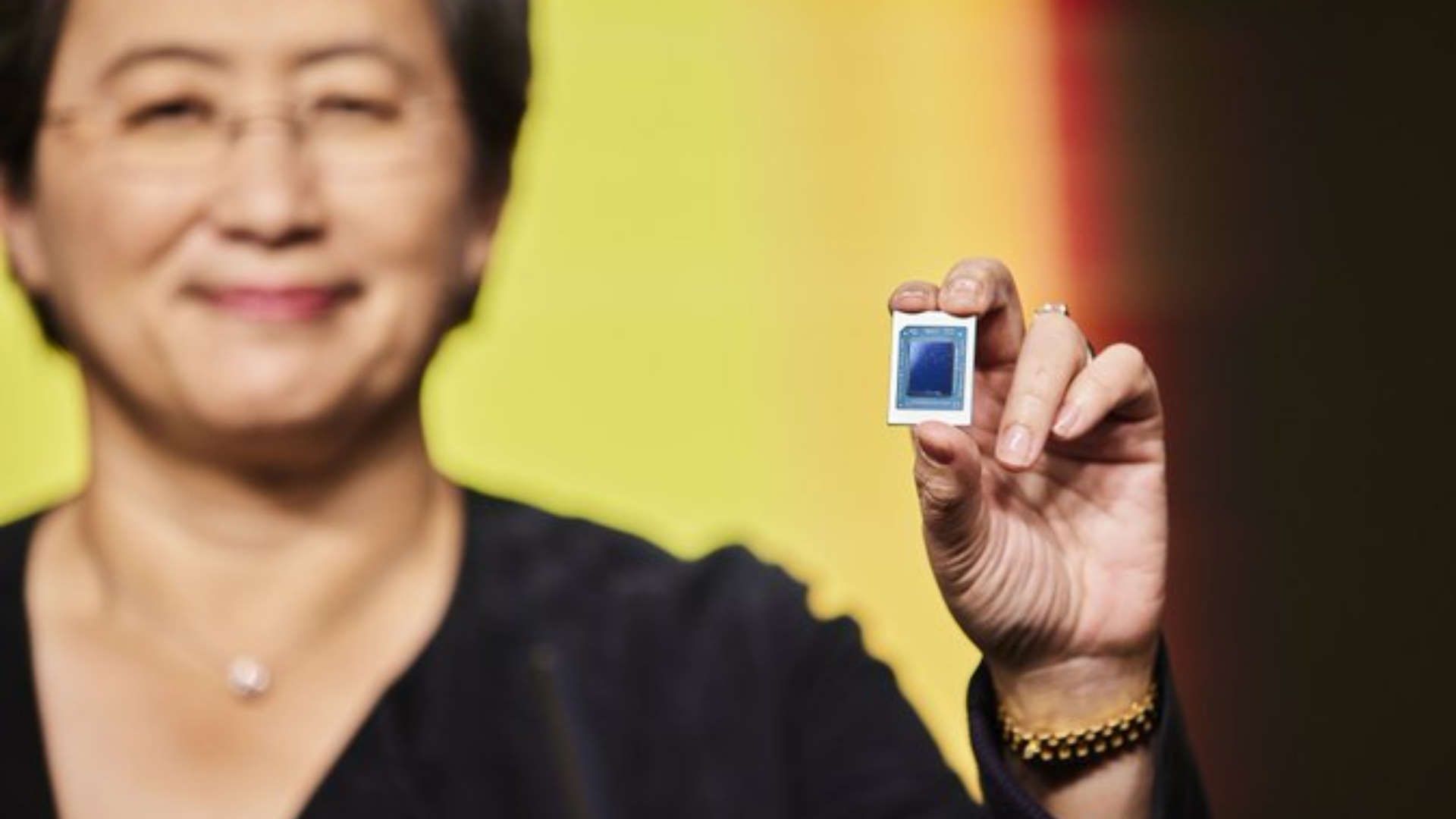
AMD's Lisa Su Rejects AI Bubble Fears, Points to Real-World Growth

📷 Image source: cdn.mos.cms.futurecdn.net
A CEO's Emphatic Rebuttal to AI Bubble Talk
AMD's leader stakes her position on the industry's long-term trajectory
In a technology landscape increasingly dominated by discussions of artificial intelligence, one of the industry's most prominent CEOs has delivered a firm verdict on the debate over an AI bubble. According to pcgamer.com, AMD's Chair and CEO, Dr. Lisa Su, was asked directly if she believes the current AI boom is a bubble. Her response was unequivocal: 'Emphatically, from my perspective, no.'
This statement, reported by pcgamer.com on December 5, 2025, cuts through a wave of market speculation and analyst caution. Su's perspective carries significant weight, as AMD has positioned itself as a key player in supplying the high-performance semiconductors that power AI data centers and systems worldwide. Her dismissal of bubble fears is not based on hype, but on her observation of tangible, widespread adoption.
The Foundation: AI's Move Beyond Hype into Deployment
The core of Lisa Su's argument, as detailed in the report, rests on the transition of AI from a theoretical concept to a deployed technology generating real economic value. She pointed to the sheer breadth of companies now actively implementing AI solutions. 'Every company is trying to figure out how to use AI to be more productive,' Su stated, according to the pcgamer.com article.
This isn't a story about a handful of tech giants; it's about a cross-industry movement. From manufacturing and logistics to healthcare and finance, enterprises are moving beyond experimentation. They are integrating AI tools for tasks like predictive maintenance, supply chain optimization, and automated customer service. This broad-based deployment phase, Su suggests, is what separates the current moment from historical technology bubbles that were fueled more by investor frenzy than by practical utility and measurable return on investment.
The Hardware Imperative: Why Chips Are the Bellwether
Demand for processing power offers a concrete metric
From her vantage point at the helm of a major chip designer, Lisa Su sees a fundamental indicator of sustainable growth: relentless demand for computing power. AI models, particularly the large language models and diffusion models capturing public imagination, are notoriously computationally intensive. Training them requires thousands of specialized processors running for weeks or months.
As reported by pcgamer.com, Su's view is that this creates a tangible, physical market for the advanced semiconductors AMD and its competitors produce. A bubble in financial markets can exist alongside stagnant or declining demand for the underlying product. In contrast, the report highlights that the demand for AI-capable chips from cloud providers, enterprises, and research institutions continues to surge. This hardware demand, which requires multi-billion dollar fabrication investments and long lead times, serves as a grounding force, suggesting the growth is built on infrastructure needs, not just speculative trading.
Acknowledging the Cycle: Growth Amidst Natural Volatility
To be clear, Lisa Su's rejection of a bubble does not imply a prediction of smooth, uninterrupted growth. The pcgamer.com report captures a nuanced understanding of the business cycle. The technology sector is inherently cyclical, with periods of rapid expansion followed by consolidation and correction.
Su's argument appears to be that the AI sector is in a genuine growth cycle driven by adoption, not a speculative bubble destined to pop and collapse. There will be winners and losers, and valuations for some pure-play AI companies may prove excessive. However, the underlying driver—the integration of AI into global business operations and consumer products—is a secular trend, not a fleeting fad. This distinction is crucial for understanding the long-term investment and strategic planning of companies like AMD.
The Competitive Landscape and AMD's Strategic Bet
Lisa Su's confidence is also a reflection of AMD's strategic positioning. The company has aggressively developed its Instinct series of data center GPUs and its EPYC server CPUs, directly challenging NVIDIA's dominance in the AI accelerator market. Her public stance on the market's durability is a signal to investors, partners, and customers about AMD's commitment.
According to the report, this isn't just optimistic talk. It underpins massive R&D expenditures and capital allocation decisions. By stating that this is not a bubble, Su reinforces the rationale for these investments. She is betting that the capacity AMD is building today will be needed tomorrow and for the foreseeable future, as the computational requirements for next-generation AI models continue to scale exponentially.
Historical Context: Lessons from Past Tech Manias
How does the AI surge compare to the dot-com era?
Any discussion of a technology bubble inevitably draws comparisons to the dot-com crash of the early 2000s. That period was characterized by companies with no revenue, dubious business models, and the word '.com' in their name commanding massive valuations based solely on the potential of the internet.
The current AI landscape, as implied by Su's comments reported by pcgamer.com, possesses different characteristics. The primary adopters and investors today are established, revenue-generating corporations—from Microsoft and Google to automotive companies and pharmaceutical giants—seeking efficiency gains and new capabilities. The value proposition is often centered on cost reduction and productivity enhancement, which are measurable outcomes. While startup activity is feverish, a significant portion of the investment is flowing into the foundational layer of hardware and cloud infrastructure, which has clear utility regardless of which specific AI application succeeds.
The Productivity Promise: AI as a Tool, Not a Toy
A key thread in Lisa Su's argument, per the pcgamer.com article, is the focus on productivity. 'Every company is trying to figure out how to use AI to be more productive,' she noted. This framing is powerful. Productivity-enhancing tools have a long history of driving sustained economic growth.
Consider the proliferation of personal computers, enterprise software, and industrial robotics. Each faced skepticism and hype cycles, but their core function of doing more with less ensured their long-term adoption. AI, particularly in forms like generative AI for content creation and code generation, or predictive AI for logistics, fits this mold. When a technology demonstrably improves a company's bottom line, its adoption becomes a competitive necessity rather than an optional experiment, creating a more stable demand curve.
Looking Ahead: Sustainability in an Evolving Market
The final question is one of sustainability. Can the current pace of investment and growth be maintained? Lisa Su's perspective, as reported, suggests the market is still in its early innings regarding enterprise adoption. Many projects are in pilot phases, and the full-scale integration of AI across business workflows will take years, even decades.
This long rollout period provides a runway for the industry. It won't be a straight line up; there will be challenges related to regulation, energy consumption, model accuracy, and public trust. However, the direction of travel seems set. As Su's emphatic 'no' indicates, the leaders building the infrastructure believe they are laying the groundwork for a permanent technological shift, not fueling a temporary market mania. The coming years will test this conviction, but for now, a major voice in the silicon that powers AI sees clear skies ahead, not a bubble about to burst.
#AMD #LisaSu #AI #Semiconductors #Technology


