

A Cubic Inch Apart, Worlds Apart: The Distinct Engineering Paths of GM's 454 and 455 V8s

📷 Image source: slashgear.com
The Illusion of Similarity
Why Displacement Alone Tells a Fraction of the Story
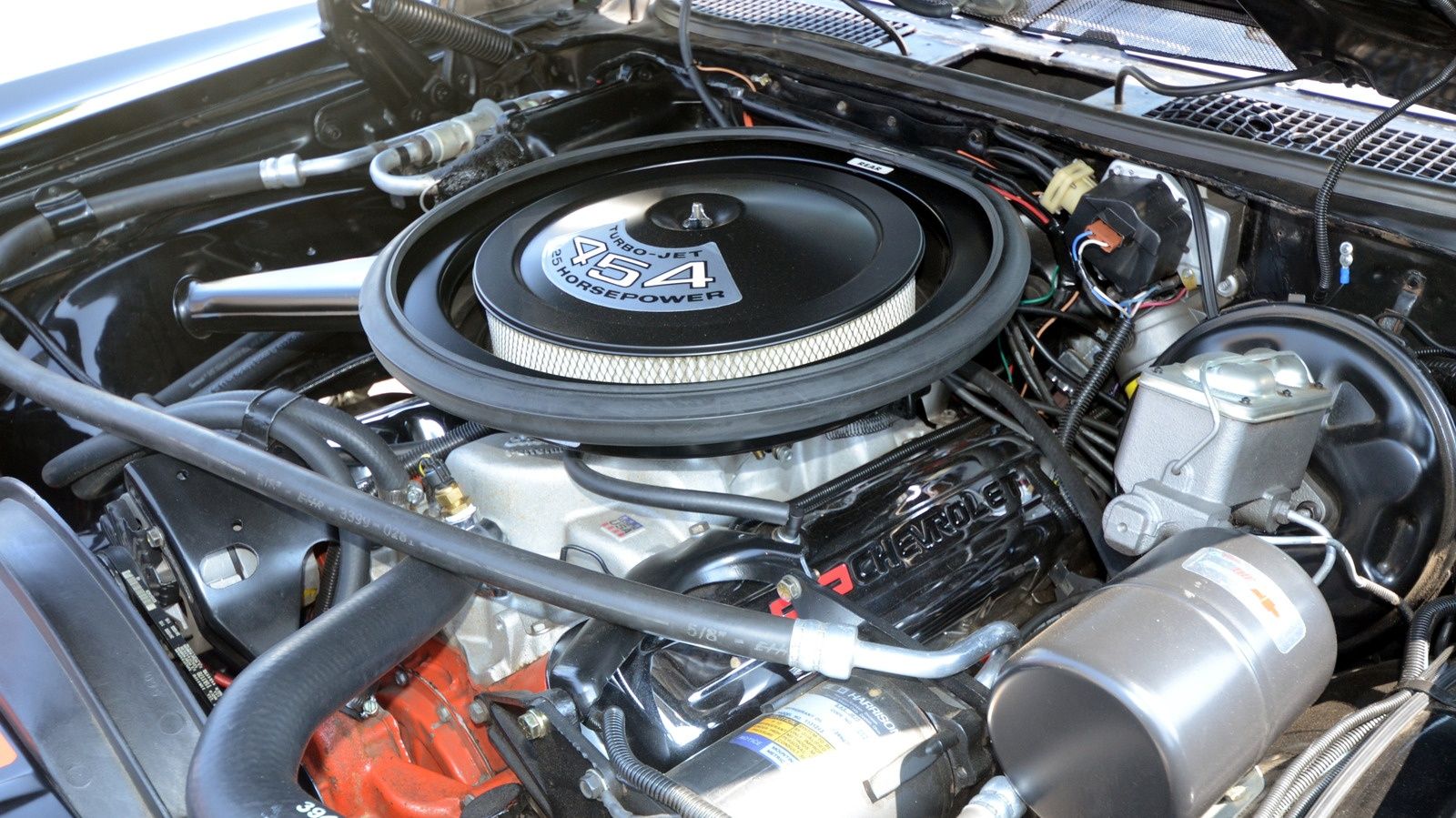
On paper, they appear nearly identical. Two American V8 engines from the same corporate family, separated by a single cubic inch of displacement. Yet, as a report from slashgear.com details, the Chevrolet 454 and the Pontiac 455, both produced by General Motors in the early 1970s, represent fundamentally different engineering philosophies. The Chevy big-block and the Pontiac V8 were solutions to the same problem—delivering massive torque for heavy, luxury-oriented vehicles—but arrived at their power through divergent design paths.
This distinction is crucial for enthusiasts and historians. It underscores how corporate siblings can foster intense internal competition and technological diversity. While both engines powered some of the era's most iconic muscle cars and personal luxury coupes, understanding their differences reveals more about GM's internal structure and brand identity than any spec sheet ever could.
Architectural Foundations: Big-Block vs. Senior V8
Core Design Choices That Defined an Era
The most fundamental split lies in their architecture. According to the slashgear.com analysis, the Chevrolet 454 is a traditional 'big-block' engine. This design is characterized by a tall deck height, which provides a robust structure and allows for large cylinder bores. The big-block family, which included the 454, was engineered from the outset for high displacement and strength, often at the expense of external dimensions and weight.
In contrast, the Pontiac 455 was not considered a 'big-block' in the same sense. Pontiac's approach, as explained in the report, was to evolve its 'standard' or 'senior' V8 architecture to ever-larger displacements. This resulted in an engine that was physically more compact in external dimensions compared to the Chevy big-block, despite their nearly identical internal volume. This packaging advantage was a key Pontiac selling point, allowing the large engine to fit more easily into a variety of chassis without major modifications.
Bore and Stroke: The Geometry of Power
The mechanical blueprint of an engine—its bore (cylinder diameter) and stroke (piston travel distance)—dictates its personality. Here, the two GM powerplants diverge sharply. The slashgear.com report provides the critical figures: the Chevrolet 454 featured a relatively 'square' design with a 4.25-inch (108 mm) bore and a 4.00-inch (101.6 mm) stroke.
Pontiac took the opposite tack. The 455 utilized a smaller 4.15-inch (105.4 mm) bore paired with a much longer 4.21-inch (106.9 mm) stroke. This 'undersquare' or long-stroke configuration is a classic recipe for generating immense low-end torque. The longer lever arm of the crankshaft allows the engine to produce more twisting force at lower revolutions per minute. This characteristic made the Pontiac 455 exceptionally smooth and effortless in moving heavy vehicles like the Grand Prix or Bonneville, delivering a surge of power from a near-idle.
The Torque Titans: Output and Character
Peak Numbers and the Feel Behind Them
Both engines were torque monsters, but they delivered their punch differently. In their highest factory performance forms, the numbers were strikingly close. The report cites the LS6 version of the Chevy 454, which produced 450 lb-ft (610 Nm) of torque. The Pontiac 455 HO, its ultimate performance iteration, was rated at 500 lb-ft (678 Nm).
However, the Pontiac's long-stroke design meant its peak torque arrived at a very low 3,100 rpm, while the Chevy's typically peaked higher in the rev range. This gave the two engines distinct personalities. The Pontiac felt effortlessly muscular, a lazy giant that could shove a car forward with minimal fuss. The Chevy, while still immensely powerful down low, often felt more eager to rev and was more frequently paired with aggressive gearing in performance applications like the Corvette and Chevelle SS.
Internal Anatomy: Cranks, Rods, and Combustion Chambers
Delving deeper into the internal components highlights further engineering separation. The crankshafts, as noted by slashgear.com, were not interchangeable. The Pontiac's longer stroke required a specific crank, and its main bearing journal diameter was smaller than the Chevy's—3.25 inches versus 2.75 inches for the Pontiac.
Cylinder head design also differed profoundly. Pontiac was famous for its heart-shaped combustion chambers and canted valves, a design aimed at promoting efficient airflow and combustion. Chevy big-block heads varied widely but often featured larger, straighter ports designed for ultimate high-rpm airflow. These head designs directly influenced the engines' breathing efficiency, compression ratios, and ultimately, their tuning potential and fuel requirements.
The Brand Divide: Marketing and Model Placement
Corporate Strategy Under the Hood
The engines were not just mechanical devices; they were brand ambassadors. Chevrolet, positioned as GM's volume performance leader, used the 454 as a halo powerplant in its most iconic models. It was the top option in the Chevelle SS and Corvette, cementing Chevy's 'performance for the masses' image.
Pontiac, styling itself as GM's 'Excitement' division, used the 455 to deliver a different kind of thrill. It was less about raw, drag-strip horsepower and more about refined, overwhelming torque. The 455 was the pinnacle engine for luxurious yet potent cruisers like the Grand Prix, GTO, and Trans Am. This placement reinforced Pontiac's niche as a provider of sophisticated performance, where smooth, silent power was as important as the acceleration it produced.
Legacy and Aftermarket: The Modern Verdict
The passage of time has treated these two engines differently in the eyes of enthusiasts and the aftermarket. The Chevrolet big-block, including the 454, became an industry standard. Its massive parts availability, extensive documentation, and simpler interchangeability have made it a perennial favorite for swaps and high-performance builds across the globe. Its design was proliferated in trucks and industrial applications for decades.
The Pontiac 455, while revered by purists, occupies a more niche space. Its unique, non-interchangeable parts make it more expensive and challenging to build. However, this exclusivity fuels its dedicated following. For restorers of classic Pontiacs, only the correct 455 will do, and its distinctive torque-rich character is a key part of the authentic driving experience. The engine is a testament to a time when GM divisions had the autonomy to engineer their own solutions, for better or worse.
A Single Cubic Inch, A World of Philosophy
The tale of the 454 and the 455 is a masterclass in automotive engineering diversity. As the slashgear.com report concludes, that one cubic inch difference is the least significant distinction between them. They were born from different design schools, built with different components, and delivered their power with a different feel.
This comparison, published by slashgear.com on December 5, 2025, serves as a reminder of an era now past. It was a time when corporate badge engineering hadn't fully homogenized product lines, and engineering departments had the freedom to pursue their own visions of performance. The Chevrolet 454 and Pontiac 455, separated by a mere sliver of displacement, stand as powerful, rumbling monuments to that age of mechanical individuality.
#V8Engine #GMHistory #ClassicCars #EngineDesign #AutomotiveEngineering


