

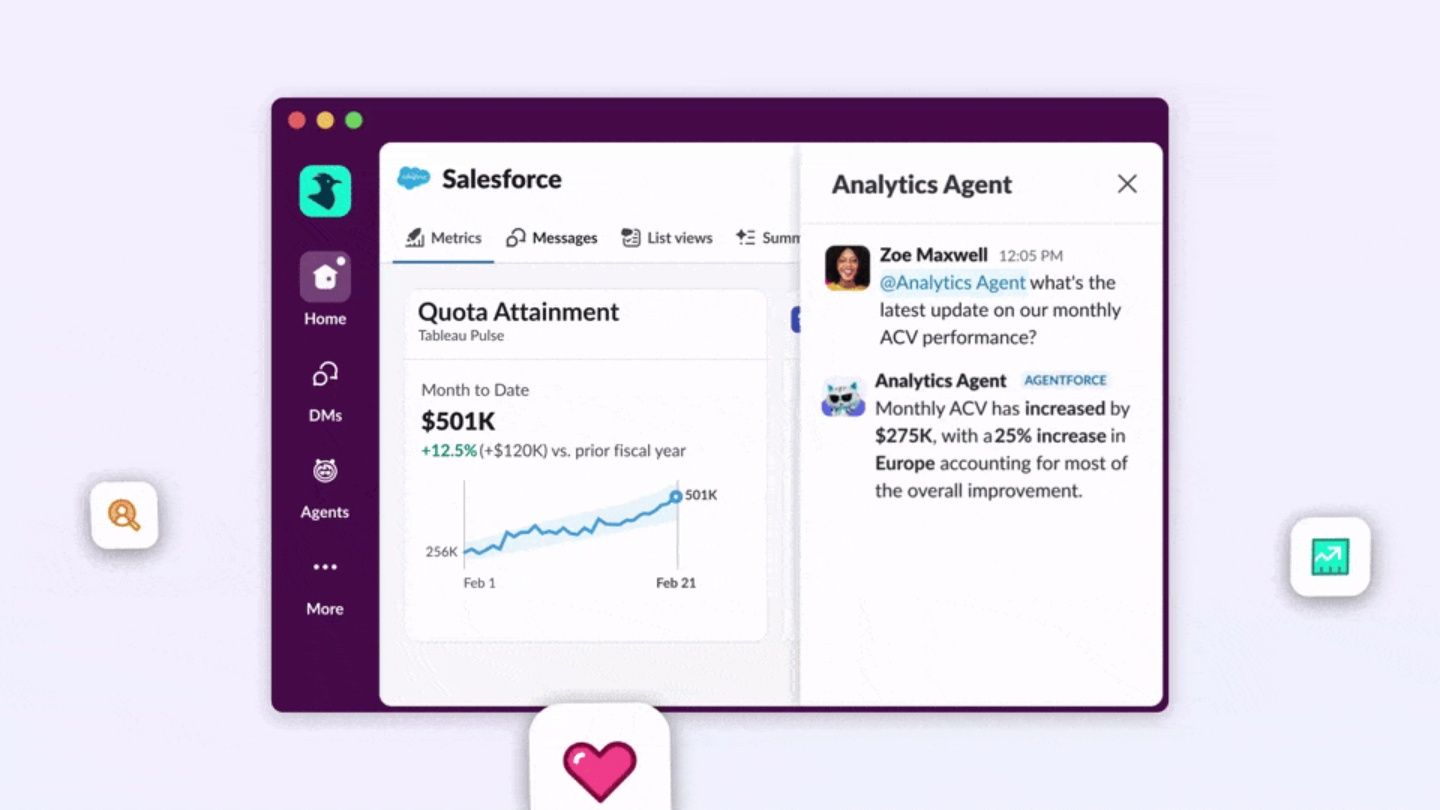
Salesforce Transforms Slack into Hub for AI Agents That Work Alongside Humans

📷 Image source: d15shllkswkct0.cloudfront.net
The Evolution of Workplace Communication
From Simple Messaging to AI-Powered Collaboration
When Salesforce acquired Slack for $27.7 billion in 2021, industry observers speculated about how the customer relationship management giant would integrate the popular messaging platform. The answer has now emerged with startling clarity: Salesforce is transforming Slack into a comprehensive platform for conversational artificial intelligence agents. This strategic move represents one of the most significant shifts in enterprise software since the transition to cloud computing.
According to siliconangle.com, 2025-10-13T12:00:01+00:00, these AI agents will be capable of performing complex workplace tasks through natural conversation. Unlike previous chatbots that primarily answered questions, these new agents can execute multi-step processes, access business data, and complete assignments across various enterprise systems. The development marks a fundamental reimagining of how employees might interact with technology in their daily work environments.
How Conversational AI Agents Actually Work
The Technical Architecture Behind the Transformation
The conversational AI agents operate through a sophisticated technical architecture that integrates multiple artificial intelligence subsystems. Natural language processing engines interpret user requests, while machine learning models understand context and intent. These systems connect to Salesforce's Einstein AI platform and can interface with external business applications through secure application programming interfaces.
When a user makes a request, the system analyzes the conversation history, user permissions, and available data sources to determine the appropriate action. The agents can perform tasks ranging from scheduling meetings and generating reports to analyzing customer data and creating workflow automations. This represents a significant advancement over previous enterprise AI systems that typically required specific commands or structured inputs to function effectively.
Five Key Capabilities Reshaping Work
Measuring the Impact Through Core Functions
The first transformative capability involves automated workflow execution. Employees can now delegate multi-step processes to AI agents through simple conversation. For instance, requesting 'prepare the quarterly sales report for the European division and share it with the leadership team' triggers a sequence of data gathering, analysis, formatting, and distribution actions that previously required manual intervention across multiple applications.
Natural language data analysis represents the second major capability. Users can ask complex questions about business metrics and receive synthesized answers with relevant visualizations. The third function centers on intelligent meeting management, where AI agents can schedule, summarize, and action items from conversations. Customer service automation forms the fourth pillar, enabling AI agents to handle routine inquiries while escalating complex cases. The fifth capability involves cross-platform integration, allowing these agents to operate across Salesforce's ecosystem and connected third-party applications.
Implementation Timeline and Rollout Strategy
From Limited Release to Enterprise Deployment
Salesforce has adopted a phased rollout approach for the conversational AI platform. The initial limited release began in early October 2025 with select enterprise customers who had extensive experience with both Salesforce and Slack. This controlled deployment allowed for real-world testing and refinement of the AI agents' capabilities before broader availability.
The general availability timeline extends through 2026, with different feature sets becoming accessible to various customer tiers throughout the year. According to siliconangle.com, the implementation includes comprehensive training resources and dedicated support teams to assist organizations with integration. The staged approach acknowledges the significant change management required when introducing AI agents that fundamentally alter workplace dynamics and processes.
Privacy and Security Considerations
Balancing Capability with Data Protection
The integration of AI agents capable of accessing sensitive business data raises significant privacy and security questions. Salesforce has implemented multiple layers of protection, including role-based access controls that ensure AI agents only interact with data and systems appropriate to each user's permissions. All conversations and actions undergo encryption both during transmission and while stored on company servers.
Organizations maintain granular control over what information AI agents can access and what actions they can perform. The system includes comprehensive audit trails that document every AI-agent interaction, providing transparency and accountability. These measures address concerns about AI systems potentially overstepping boundaries or mishandling confidential business information, though some privacy advocates question whether these protections will prove sufficient as the technology evolves.
Comparative Analysis with Competing Platforms
How Salesforce's Approach Differs from Microsoft and Google
Salesforce's strategy positions it uniquely against major competitors in the enterprise AI space. Unlike Microsoft's Copilot system, which primarily enhances existing Microsoft 365 applications, Salesforce's AI agents aim to operate across diverse business systems through Slack's interface. This cross-platform approach could provide significant advantages in heterogeneous technology environments where companies use applications from multiple vendors.
Google's enterprise AI offerings have focused more on enhancing search and knowledge management within their ecosystem. Salesforce's conversational agents take a different direction by emphasizing task completion and workflow automation. The integration with Salesforce's customer relationship management data creates distinctive capabilities for sales, marketing, and customer service functions that competing platforms may struggle to match without similar access to comprehensive customer intelligence.
Impact on Employee Roles and Responsibilities
Redefining Work in the Age of AI Collaboration
The introduction of sophisticated AI agents inevitably raises questions about how human roles will evolve. Rather than replacing employees, these systems appear designed to augment human capabilities by handling routine tasks and information retrieval. This could free workers to focus on strategic thinking, creative problem-solving, and complex decision-making that requires human judgment and emotional intelligence.
The technology may also create new specialist roles focused on training, managing, and optimizing AI agent performance. Employees might need to develop skills in AI supervision, prompt engineering, and interpreting AI-generated insights. Organizations will likely need to invest in retraining programs to help workers transition to these new collaborative relationships with artificial intelligence systems that function as capable assistants rather than simple tools.
Technical Requirements and Infrastructure
What Organizations Need for Successful Implementation
Deploying conversational AI agents requires specific technical foundations beyond standard Slack usage. Organizations need robust network infrastructure to handle increased data transmission between AI systems and business applications. Computing resources must support the processing demands of natural language understanding and machine learning inference, which can be substantial for complex queries and large user bases.
Data integration represents another critical requirement. For AI agents to perform meaningful work, they need access to well-structured, current business information. Companies with fragmented data systems or inconsistent data quality may need significant preparation work before realizing full benefits. The implementation process typically involves mapping existing workflows to AI-capable processes and establishing clear boundaries for AI agent authority and autonomy.
Cost Considerations and Return on Investment
Balancing Expense Against Potential Efficiency Gains
The financial implications of adopting conversational AI agents involve both direct costs and potential efficiency savings. Salesforce has structured pricing around tiered subscriptions that scale with usage levels and feature access. Enterprise-level implementations require budget allocation for licensing, implementation services, training, and ongoing support.
The return on investment calculation must account for multiple factors beyond simple labor reduction. Potential benefits include faster process completion, reduced errors in routine tasks, improved decision-making through better data access, and enhanced employee satisfaction by eliminating tedious work. Organizations will need to develop specific metrics to evaluate whether the technology delivers meaningful value given their particular operational context and strategic priorities.
Future Development Roadmap
Where Conversational AI in Slack Is Heading Next
Salesforce's vision extends well beyond the current capabilities of its conversational AI agents. Future development priorities include enhanced multimodal interactions that incorporate voice, images, and potentially video. The company is also working on more sophisticated reasoning capabilities that would allow AI agents to handle increasingly complex and ambiguous requests without human intervention.
Longer-term ambitions involve creating specialized AI agents tailored to specific industries and business functions. These domain-specific agents would possess deeper understanding of particular workflows, terminology, and regulatory requirements. The ultimate goal appears to be creating a ecosystem where AI agents not only execute tasks but proactively identify opportunities for process improvement and business optimization based on patterns they detect across organizational activities.
Potential Limitations and Challenges
Understanding the Boundaries of Current AI Capabilities
Despite impressive capabilities, conversational AI agents face significant limitations that organizations must recognize. The technology struggles with highly novel situations that fall outside its training data and may provide inappropriate responses when encountering edge cases. Understanding context, especially subtle social dynamics and unstated assumptions, remains challenging for artificial intelligence systems.
Integration complexity represents another substantial hurdle. Connecting AI agents to legacy systems with outdated interfaces or proprietary protocols can require custom development work. Change management presents perhaps the most underestimated challenge, as employees must develop trust in AI systems and adapt their work habits to effectively collaborate with non-human assistants. These limitations suggest that successful implementation requires realistic expectations and thoughtful planning rather than assuming the technology will immediately transform all aspects of operations.
Global Implementation Considerations
Adapting AI Agents for International Deployment
Organizations operating across multiple countries face additional considerations when deploying conversational AI agents. Language support extends beyond simple translation to understanding cultural context, business conventions, and regional communication styles. Data residency requirements vary significantly between jurisdictions, potentially complicating where AI processing occurs and how information flows across borders.
Regulatory compliance represents another critical factor, particularly in regions with strict AI governance frameworks like the European Union. The global rollout must accommodate different privacy standards, employment regulations, and industry-specific compliance requirements. These international considerations may slow deployment in some markets while requiring customized approaches that respect local legal frameworks and business practices.
Perspektif Pembaca
Sharing Experiences with Workplace AI Integration
As artificial intelligence becomes increasingly embedded in our work environments, individual experiences with these technologies vary widely. Some professionals report significant productivity gains and reduced administrative burdens, while others express concerns about deskilling, privacy implications, and the quality of AI-generated work.
We invite readers to share their perspectives on integrating AI assistants into daily workflows. What specific benefits or challenges have you encountered when collaborating with AI systems? How has the introduction of AI agents changed team dynamics, decision-making processes, or job satisfaction in your organization? Your experiences provide valuable real-world insights into how this technological transformation is actually unfolding across different industries and work contexts.
#AI #Slack #Salesforce #EnterpriseSoftware #Automation


