

The Elusive Quest: Does the Universe Have a Center?
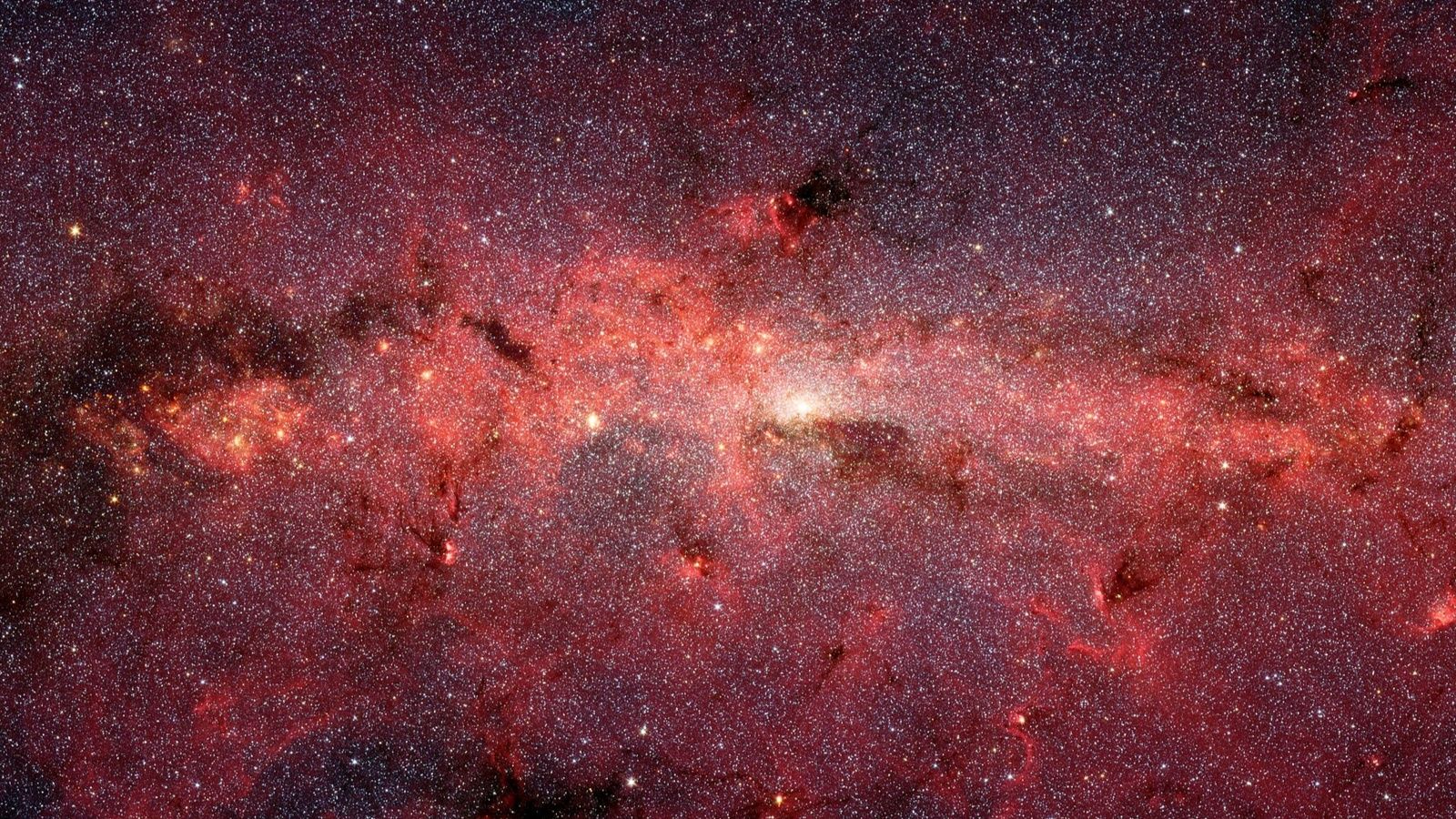

📷 Image source: cdn.mos.cms.futurecdn.net
For centuries, humans have grappled with the question of whether the universe has a center—a fixed point from which everything expands. Modern cosmology, however, challenges this intuitive notion, suggesting that the answer is far more complex than it seems.
According to leading astrophysicists, the universe doesn’t have a center in the traditional sense. The Big Bang theory describes the birth of the universe not as an explosion from a single point in space, but as the rapid expansion of space itself. This means that every region of the universe was once densely packed together, and no single location can claim to be the 'center.'
Dr. Ethan Siegel, a theoretical astrophysicist, explains that the observable universe—the part we can see—has a visible boundary due to the finite speed of light. Yet, this boundary shifts depending on the observer’s position, reinforcing the idea that there is no universal focal point. Instead, the expansion appears uniform from any vantage point, a concept supported by the cosmic microwave background radiation.
Further complicating matters, some theories propose that the universe could be infinite, rendering the search for a center meaningless. Others suggest a closed, finite geometry where traveling far enough in one direction might hypothetically bring you back to your starting point—akin to circumnavigating a globe.
While the question captivates public imagination, scientists emphasize that the absence of a center doesn’t diminish the wonder of cosmic exploration. As observational technology advances, from the James Webb Space Telescope to next-generation radio arrays, our understanding of the universe’s structure continues to evolve—even if the center remains forever out of reach.


