

Record-Breaking Black Hole Merger Defies Current Astrophysical Theories

📷 Image source: cdn.mos.cms.futurecdn.net
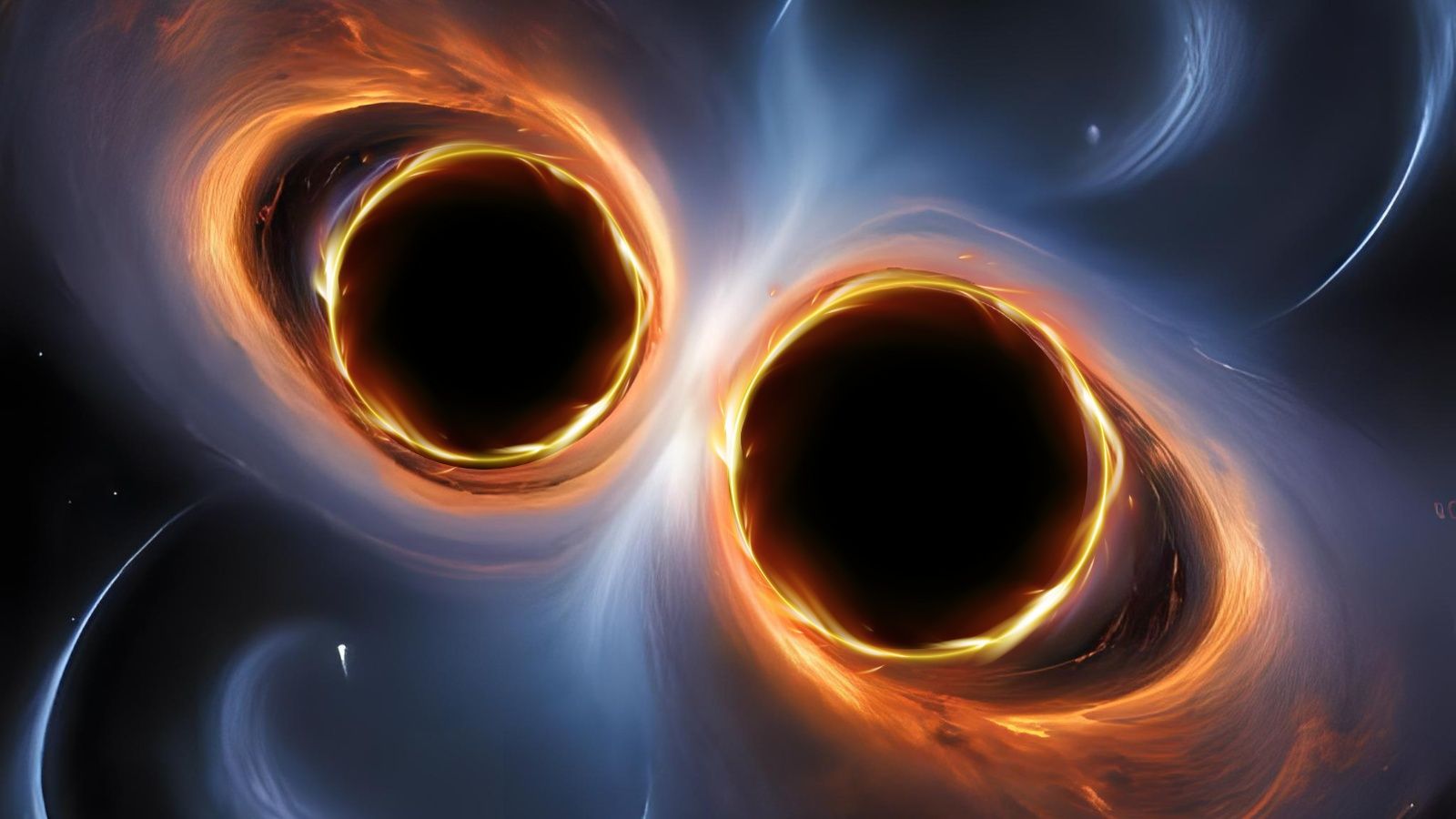
Astronomers have detected the most massive black hole merger ever observed, a collision so extreme it challenges existing astrophysical models. The event, identified through gravitational waves, involved two black holes with a combined mass roughly 150 times that of the Sun—far exceeding theoretical predictions for such mergers. The discovery was made by the LIGO-Virgo-KAGRA collaboration, which monitors ripples in spacetime caused by cosmic cataclysms. The merged black hole, now weighing 142 solar masses, falls into the elusive 'intermediate-mass' category—a long-sought missing link between stellar-mass black holes and supermassive giants at galactic centers. What makes this merger particularly puzzling is the larger progenitor black hole's estimated mass of 85 suns. Current models suggest stars in this mass range should annihilate themselves in pair-instability supernovae, leaving no remnant behind. 'This detection forces us to reconsider our understanding of black hole formation,' said Dr. Karan Jani, an astrophysicist at Vanderbilt University involved in the research. Alternative theories now being explored include hierarchical mergers in dense stellar environments or primordial black holes dating back to the universe's infancy. The findings, published in Physical Review Letters, open new questions about how such massive black holes form and find each other in the cosmic darkness. Additional observations from the Zwicky Transient Facility suggest such events might be more common than previously thought, with potential implications for understanding galaxy evolution and the universe's growth of supermassive black holes.


