

NASA's Hubble and Webb Telescopes Unveil Dual Perspectives of a Star Cluster Pair

📷 Image source: assets.science.nasa.gov
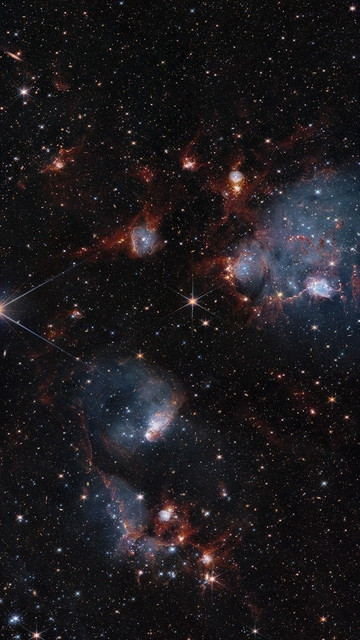
NASA's Hubble Space Telescope and James Webb Space Telescope have collaboratively captured stunning images of a star cluster duo, revealing strikingly different appearances. The observations highlight the complementary capabilities of the two telescopes, with Hubble focusing on visible light and Webb delving into infrared wavelengths.
The star cluster, known as NGC 1850, is located in the Large Magellanic Cloud, a satellite galaxy of the Milky Way. Hubble's imagery showcases the cluster's bright, blue stars, while Webb's infrared vision penetrates dust clouds to expose cooler, redder stars and intricate structures obscured in visible light. This dual perspective provides astronomers with a more comprehensive understanding of stellar formation and evolution.
Dr. Jane Rigby, a senior scientist for Webb at NASA, emphasized the significance of combining data from both telescopes. 'Hubble and Webb together offer a complete picture, like seeing both the surface and the hidden layers of a cosmic object,' she said. The findings could pave the way for new insights into the dynamics of star clusters and their role in galactic ecosystems.
The collaboration underscores the importance of multi-wavelength astronomy in unraveling the mysteries of the universe. Future joint observations are expected to further expand our knowledge of celestial phenomena.


