

NASA Adjusts Mars Orbiter's Position to Enhance Search for Water on the Red Planet

📷 Image source: cdn.mos.cms.futurecdn.net
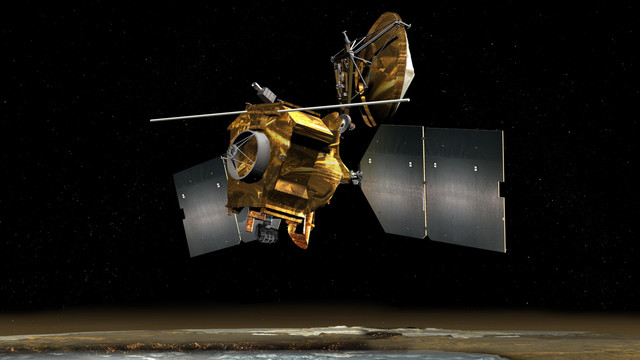
NASA has successfully reconfigured the orientation of its Mars Reconnaissance Orbiter (MRO) to improve its ability to detect subsurface water on the Red Planet. The spacecraft, which has been orbiting Mars since 2006, was instructed to perform a 'roll' maneuver, allowing its SHAllow RADar (SHARAD) instrument to scan the planet's surface at new angles. This adjustment aims to uncover hidden water ice deposits, crucial for future human exploration and understanding Mars' climate history.
The SHARAD instrument, operated by the Italian Space Agency, emits radar waves that penetrate the Martian surface, reflecting off layers of rock, ice, and other materials. By altering the orbiter's position, scientists hope to obtain clearer data and reduce interference from surface clutter. This technique could reveal previously undetected reservoirs of water ice, which may exist beneath the polar caps or in mid-latitude regions.
John Keller, deputy project scientist for the MRO mission at NASA's Jet Propulsion Laboratory, emphasized the importance of this maneuver: 'Rolling the spacecraft allows us to see the subsurface in a new way, potentially uncovering features we’ve missed before.' The MRO's adjusted orbit will also support other scientific instruments, including high-resolution cameras and spectrometers, to further analyze Martian geology and atmosphere.
This innovation underscores NASA's ongoing efforts to maximize the capabilities of aging spacecraft. The MRO, originally designed for a two-year mission, continues to deliver valuable data nearly two decades later. The findings could play a pivotal role in planning future crewed missions to Mars, where water resources would be essential for sustaining human presence.


