

UALink: The Open Standard Challenging NVIDIA's AI Dominance

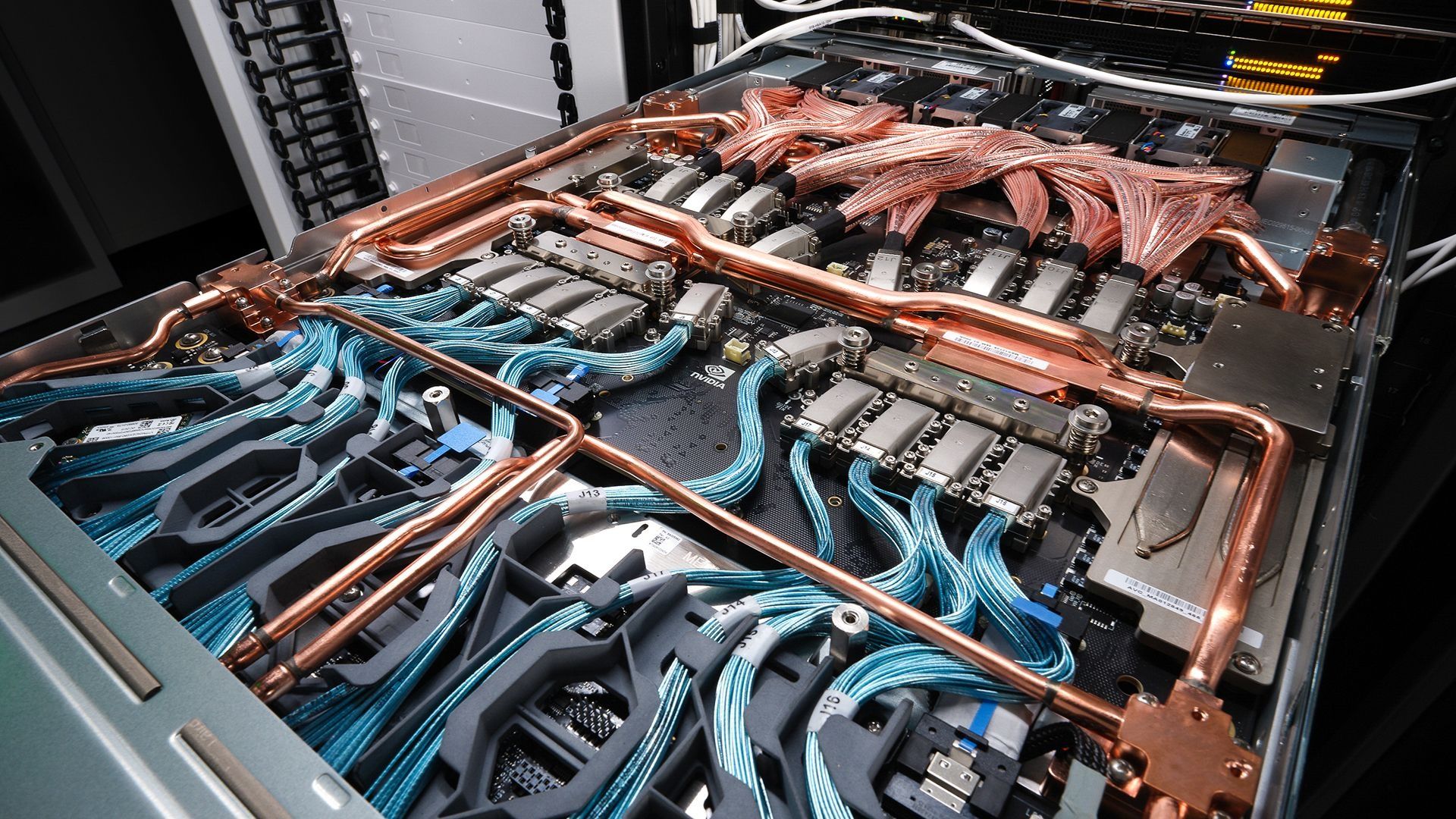
📷 Image source: cdn.mos.cms.futurecdn.net
The AI Interconnect Bottleneck
Why Data Center Wiring is the New Battleground
Modern artificial intelligence (AI) models are not just software; they are sprawling computational ecosystems. Training a large language model like GPT-4 requires thousands of specialized AI accelerators—GPUs or other chips—to work in concert for months. The critical, often overlooked, component enabling this collaboration is the physical and software layer that connects them: the data center interconnect.
According to tomshardware.com, dated 2026-02-20T12:49:22+00:00, the performance of these interconnects directly dictates how efficiently an AI cluster can scale. A bottleneck here means expensive processors sit idle, waiting for data, dramatically increasing training time and cost. For years, this domain has been dominated by a single vendor's proprietary technology, creating a significant challenge for the industry.
Enter UALink: A Consortium's Answer to Lock-In
The Coalition Behind the Open Standard
In response to this vendor lock-in, a major industry consortium has formed to develop UALink (Ultra Accelerator Link). The group, which includes tech heavyweights like Google, Intel, AMD, Meta, Microsoft, Cisco, HPE, and Broadcom, aims to create an open, high-performance interconnect standard. The goal is to allow AI accelerators from different manufacturers to communicate efficiently within a data center rack or across racks, fostering competition and innovation.
The formation of this group signals a strategic shift. By pooling resources and expertise, these companies are attempting to dismantle a key competitive moat in the AI hardware space. An open standard, if widely adopted, could reduce costs for cloud providers and AI developers by enabling a multi-vendor supply chain and preventing dependency on a single company's ecosystem for critical infrastructure.
Dissecting the UALink 1.0 Specification
The Technical Foundation for Open AI Clusters
The UALink 1.0 specification, as detailed in the report, lays the groundwork for this new ecosystem. It defines a switch-based architecture, a departure from the purely peer-to-peer connections of some existing solutions. This approach is designed for scalability, allowing more than just two devices to be linked directly. The initial specification supports configurations of up to 1,024 accelerators, a scale aimed at the largest AI training workloads.
At its core, UALink consists of a physical layer, a data link protocol, and a software stack. The physical layer handles the high-speed signaling over cables, while the protocol manages reliable data transfer. Crucially, the consortium is developing a common software layer, UALink Software (UALink SW), which will include communication libraries and management tools. This software component is vital for ensuring that applications can run on any UALink-compliant hardware without major modifications.
The Roadmap: From 1.0 to Future-Proof Scaling
A Phased Approach to Performance and Capacity
The consortium has not just released a static specification; it has published a forward-looking roadmap. Following UALink 1.0, the plan is to develop UALink 1.1, which will focus on enhancing the scale and capabilities of the initial design. This iterative approach allows for early adoption and feedback while signaling a commitment to long-term evolution, a necessary reassurance for companies considering major infrastructure investments.
The roadmap's existence is a direct challenge to proprietary development cycles. It provides the market with visibility into the standard's future, enabling hardware and software developers to plan their products with confidence. This transparency is a key advantage of a consortium-driven model, aiming to create a predictable and collaborative innovation pipeline rather than a closed, unilateral one.
The Incumbent: NVIDIA's NVLink and NVSwitch
The Proprietary Benchmark UALink Must Surpass
To understand UALink's ambition, one must examine the technology it seeks to compete with: NVIDIA's NVLink and its companion NVSwitch. NVLink is a high-bandwidth, direct GPU-to-GPU interconnect that has evolved over multiple generations. When combined with the NVSwitch silicon, it allows dozens of GPUs in a single server to behave as one massive computational unit, a cornerstone of NVIDIA's DGX supercomputers.
This tightly integrated hardware and software stack has given NVIDIA a formidable performance advantage in large-scale AI training. However, it only works between NVIDIA GPUs, creating a closed garden. The UALink consortium's explicit goal is to create an open alternative that can match or exceed this performance while enabling choice. The success of UALink hinges on its ability to deliver comparable bandwidth, latency, and scalability without being tied to a single chip architecture.
The Economics of an Open AI Data Center
Cost, Competition, and Strategic Flexibility
The push for UALink is driven by more than just technical ideals; it is a profound economic calculation. Vendor lock-in in critical infrastructure leads to higher prices, reduced bargaining power for buyers, and potential stagnation in innovation. By fostering an open ecosystem, the UALink backers hope to spur competition among accelerator vendors (like AMD, Intel, and future entrants) and switch manufacturers (like Broadcom and Cisco).
This competition should, in theory, drive down costs and accelerate technological improvements. For massive AI consumers like Google, Meta, and Microsoft, this translates to lower operational expenses for their cloud and internal AI workloads. It also provides strategic flexibility, allowing them to mix and match hardware from different suppliers or pivot to a new vendor's superior chip without overhauling their entire data center interconnect fabric.
Implementation Hurdles and Technical Challenges
The Gap Between Specification and Reality
Publishing a specification is the first step; delivering performant, reliable, and interoperable hardware and software is another. One of UALink's primary challenges will be ensuring true interoperability. A switch from one vendor must work flawlessly with accelerators from multiple other vendors, all running the same software stack. Achieving this level of seamless integration across corporate boundaries is a complex engineering and testing endeavor.
Furthermore, the standard must evolve quickly enough to keep pace with the blistering innovation in AI models and accelerator chips. The consortium's governance model—how it makes decisions on new features and revisions—will be critical. There is a risk that competing interests within the group could slow down the standardization process, leaving it lagging behind proprietary solutions that can move faster under a single company's direction.
The Broader Ecosystem: CXL and Industry Synergy
How UALink Fits Into the Data Center Puzzle
UALink does not exist in a vacuum. It enters a data center landscape with other emerging interconnect standards, most notably Compute Express Link (CXL). CXL is designed for broader-purpose memory coherence and resource pooling between CPUs, memory, and accelerators. According to industry analysis, UALink and CXL are largely complementary; UALink is optimized for dense, high-bandwidth communication between AI accelerators, while CXL handles memory expansion and sharing.
Future advanced data centers will likely employ both standards. An AI accelerator might use UALink to talk to its peers at extreme speed for model parallelism, while simultaneously using CXL to access a vast, shared pool of memory. Understanding this synergy is key to seeing UALink not as a standalone solution, but as a specialized component in a heterogeneous, open data center architecture.
Global Implications for AI Development
Democratizing Access to Supercomputing-Scale AI
The impact of a successful UALink standard extends beyond the balance sheets of tech giants. By creating a viable open alternative, it could lower the barriers to entry for building massive AI clusters. Research institutions, smaller nations, and companies outside the hyperscaler circle could potentially assemble competitive AI training infrastructure using best-of-breed components from a competitive market.
This has implications for the global AI race, potentially enabling a more diverse set of players to contribute to foundational model development. It could also influence national tech sovereignty strategies, as countries seek to build internal AI capacity without being reliant on a single foreign vendor's complete stack. An open interconnect is a small but vital piece in building resilient and competitive AI ecosystems worldwide.
The Timeline to Market and Adoption Realities
When Will UALink-Powered Systems Arrive?
The roadmap published by the consortium provides a technical direction, but concrete product timelines from member companies remain less clear. The development cycle for compliant switches, adapter cards, and mature software stacks is measured in years, not months. Early implementations will likely appear in the private data centers of consortium members like Google and Meta for internal validation, long before they are offered as commercial products.
Widespread adoption by enterprise customers and cloud providers will depend on demonstrable proofs of performance parity, robust vendor support, and a compelling total cost of ownership argument. The transition from a proprietary, mature technology like NVIDIA's to a new open standard is inherently gradual and risky. Early adopters will be those for whom strategic flexibility and long-term cost control outweigh the potential near-term performance or stability advantages of a single-vendor solution.
Perspektif Pembaca
The move toward open standards like UALink represents a pivotal moment in AI infrastructure. Will a collaborative model ultimately deliver the innovation pace and performance needed to keep up with AI's demands, or will the focused execution of a single vendor continue to dominate?
We want to hear from you. Based on your experience in technology or business, what do you see as the biggest factor that will determine the success or failure of the UALink initiative? Is it pure technical performance, the speed of ecosystem development, corporate politics within the consortium, or something else entirely? Share your perspective on the key hurdle this ambitious project must overcome.
#UALink #AI #OpenStandard #DataCenter #NVIDIA


