

The Milliseconds Race: How a Global Bank Engineered Its Trading Platform for Ultra-Low Latency

📷 Image source: images.ctfassets.net
Introduction: The High-Stakes World of Microsecond Trading
Where Every Nanosecond Counts
In the global financial markets, speed is not just an advantage; it is the currency of survival. For a Tier-1 bank, the difference between profit and loss can be measured in milliseconds, the time it takes for light to travel roughly 300 kilometers (about 186 miles). This relentless pursuit of speed drives a continuous technological arms race.
According to confluent.io, one such global financial institution recently undertook a massive project to overhaul its electronic trading platform. The goal was not merely incremental improvement but achieving ultra-low latency at scale, ensuring its trading algorithms could react to market data faster than the competition. The core of this technological transformation was the tuning of its Apache Kafka data streaming infrastructure.
The Core Challenge: Latency at Scale
Balancing Speed with Reliability
The bank's primary challenge was twofold. First, it needed to process an immense, continuous firehose of market data—quotes, trades, and orders—from global exchanges. Second, it had to deliver this data to complex trading algorithms with the absolute minimum delay, a concept known as end-to-end latency. Any bottleneck could mean missed opportunities.
Traditional messaging systems often struggle with this dual demand for high throughput and low latency. The bank required a platform that could handle millions of messages per second while ensuring predictable, sub-millisecond processing times for critical paths. This is where Apache Kafka, an open-source distributed event streaming platform, entered the architectural blueprint as the central nervous system for market data distribution.
Architectural Foundation: Kafka as the Central Nervous System
Designing the Data Pipeline
The bank's design positioned Kafka as the core real-time data bus. Market data feeds from various sources were ingested, normalized, and then published to dedicated Kafka topics. A topic in Kafka is a categorized feed of messages, similar to a folder for specific data types. Trading applications and risk engines subscribed to these topics to receive live updates.
This publish-subscribe model decoupled data producers from consumers, allowing for flexible and scalable system growth. However, using Kafka effectively for ultra-low-latency trading required moving far beyond a default configuration. The bank's engineering team embarked on a deep, systematic tuning exercise targeting every layer of the Kafka stack and its surrounding infrastructure, as detailed in the confluent.io article published on 2026-01-23T21:41:23+00:00.
Tuning the Producer: Minimizing Send-Side Delay
From Batching to Compression
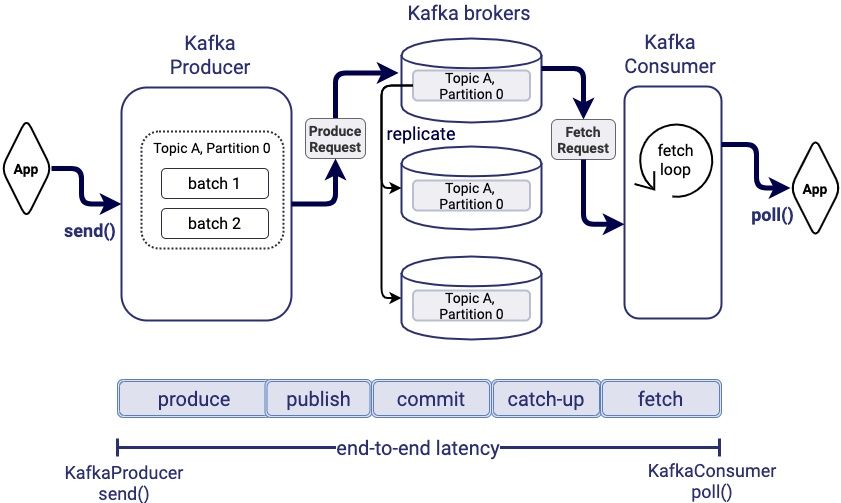
The journey of a market data message begins at the producer—the application publishing data to Kafka. Default settings often favor throughput over latency by batching messages. For trading, large batches introduce unacceptable delay. The bank configured producers for immediate sending, setting the batch size to one message and disabling linger time, which waits to fill a batch.
They also critically evaluated compression. While compression saves network bandwidth, it adds CPU overhead and time. For their lowest-latency topics, the team opted for no compression or used very fast algorithms like Zstandard or LZ4 at the fastest settings. This trade-off prioritized shaving microseconds over conserving network resources, a calculated decision given their infrastructure capacity.
Optimizing the Kafka Broker: The Heart of the Cluster
Disk, Network, and Log Configuration
The Kafka broker is the server that stores topics and serves data. Its performance is paramount. The bank employed several key optimizations. They used high-performance, low-latency solid-state drives (SSDs) for storing Kafka's commit log, the file where messages are durably written. This drastically reduced write and read times compared to traditional hard drives.
On the network layer, they tuned socket buffers and leveraged kernel bypass techniques where possible to reduce context switches between user and kernel space. Furthermore, they carefully managed Kafka log segments, keeping them small to accelerate retention and cleanup processes, preventing background tasks from interfering with the primary job of serving data with minimal delay.
Consumer-Side Tuning: The Final Mile to the Algorithm
Polling Strategies and Processing Loops
On the consuming end, where trading algorithms live, configuration is equally critical. The bank optimized the consumer's fetch parameters, reducing the minimum bytes required to trigger a fetch request. This allows the consumer to retrieve messages as soon as they are available, rather than waiting for a larger chunk of data to accumulate.
They also implemented tight, efficient processing loops. Upon fetching records, the consumer application would deserialize and pass data to the trading logic with minimal intermediary steps. Avoiding unnecessary object creation, serialization, or logging within the hot path was essential. Every microsecond saved in the consumer's code brought the algorithm closer to acting on real-time market conditions.
Infrastructure and Network: The Physical Layer
Co-location and Hardware Choices
Software tuning alone cannot defeat the laws of physics. The physical distance between systems introduces latency. To combat this, the bank co-located its Kafka clusters and trading applications in the same data center, often in the same rack or even on the same high-performance hardware. This minimized network hop latency.
They utilized high-frequency CPUs, ample memory, and network interface cards (NICs) capable of handling high packet rates. The operating system itself was tuned for performance: disabling power-saving features that could throttle CPU frequency, using real-time kernels for more predictable scheduling, and isolating cores to dedicate them to critical Kafka and trading processes, reducing contention from other tasks.
Monitoring and Validation: Measuring Every Microsecond
End-to-End Latency Tracing
You cannot improve what you cannot measure. The bank implemented rigorous, end-to-end latency monitoring. This involved instrumenting every step of the pipeline—from the moment a market data tick was received at the ingress point, through Kafka, to its processing by the trading engine. High-resolution timestamps were embedded in messages to track this journey.
This telemetry allowed engineers to identify specific bottlenecks, whether in a particular Kafka broker, a network switch, or a consumer application. It transformed latency from a vague system characteristic into a precise, actionable metric. Continuous monitoring also served as a guardrail, ensuring that any code deployment or configuration change did not inadvertently regress performance, according to the architectural case study.
Trade-offs and Considerations: The Cost of Speed
Durability, Throughput, and Complexity
The pursuit of ultra-low latency involves significant trade-offs. Configuring producers for no batching and minimal compression can reduce overall system throughput and increase network load. Tuning for immediate acknowledgment of message writes (low durability settings) can increase speed but introduces a small risk of data loss in a broker failure.
The bank had to carefully balance these factors based on the criticality of each data stream. For the most latency-sensitive order execution path, they might accept higher resource costs and slightly reduced durability guarantees. For less critical analytics feeds, higher throughput and stronger durability were prioritized. This tiered approach managed cost and risk while delivering speed where it mattered most.
Broader Implications for Financial Technology
A Benchmark for Real-Time Systems
This case study extends beyond a single bank. It demonstrates the maturity of event-streaming architectures like Kafka in supporting the most demanding real-time use cases. The principles applied—co-location, hardware optimization, deep software tuning, and exhaustive measurement—are relevant for any industry where milliseconds impact outcomes, such as telecommunications, online gaming, or real-time fraud detection.
It also highlights a shift from monolithic trading systems to modular, streaming-based architectures. This design offers greater agility, allowing new trading strategies or risk models to tap into the live data stream without disrupting existing systems. The platform becomes a reusable asset for innovation, not just a static piece of infrastructure.
Future Horizons and Limitations
The Next Frontier in Low-Latency Tech
While the bank's achievements are substantial, the technological frontier continues to advance. Emerging approaches include using specialized hardware like field-programmable gate arrays (FPGAs) to implement Kafka client logic, potentially reducing latency further. The integration of kernel-bypass networking libraries and user-space TCP stacks is another area of active exploration to shave off more microseconds.
However, limitations remain. The complexity of such a finely tuned system is high, requiring deep expertise to build and maintain. There is also an inherent tension between global operations and low latency; data crossing continents or oceans will always be bound by the speed of light in fiber optics. The bank's solution, as described, does not detail how it manages geographically dispersed data synchronization, indicating a potential area for further architectural evolution.
Perspektif Pembaca
The relentless drive for speed in finance raises profound questions about market fairness, technological arms races, and systemic risk. While this engineering feat is impressive, it exists within a broader ecosystem.
What is your perspective? Do you believe the immense investment in shaving microseconds off trade execution primarily benefits market efficiency and liquidity, or does it risk creating a two-tiered system where only the most technologically advanced players can compete effectively? Share your viewpoint based on your understanding of markets, technology, or ethics.
#ApacheKafka #LowLatency #TradingTechnology #FinancialMarkets #DataStreaming


