

Dreame's Laundry Robot: The AI-Powered System That Promises to Wash, Dry, and Fold Itself

📷 Image source: cassette.sphdigital.com.sg
The Dawn of Autonomous Laundry
A Robotic System Aims to Eliminate the Chore Entirely
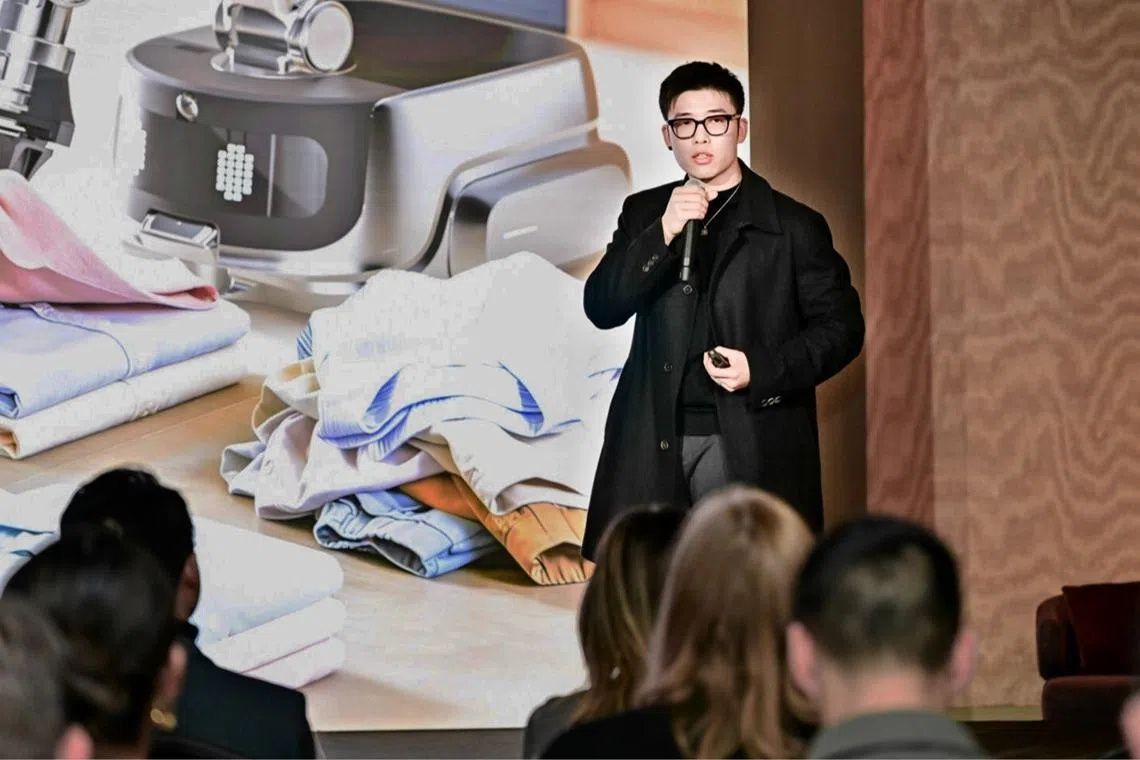
Imagine loading a basket of dirty clothes into a machine and walking away, only to return to a stack of clean, dry, and folded garments. This vision of a fully automated laundry process, long a staple of science fiction, is inching closer to reality. According to hardwarezone.com.sg, the Chinese appliance maker Dreame has unveiled a prototype for what it calls an AI Laundry Robot, a system designed to handle every step from washing to folding without human intervention.
The announcement, detailed in a report from hardwarezone.com.sg, positions this as a significant leap beyond current smart washers and dryers. While many modern machines offer app connectivity and various cycles, they still require a person to transfer wet laundry and initiate a second drying cycle. Dreame's concept appears to be a fully integrated unit, a robotic laundry 'butler' that manages the entire workflow autonomously. The core question it raises is whether this represents the next major evolution in home appliance convenience or a complex solution still searching for a widespread problem.
How the AI Laundry Robot Operates
A Seamless, Multi-Stage Process Driven by Artificial Intelligence
Based on the details from hardwarezone.com.sg, the Dreame system functions as a continuous, automated pipeline. The process begins when a user deposits their dirty laundry into a designated input area. From there, the system's robotic components take over. An AI-powered robotic arm is central to the operation, responsible for the crucial and traditionally manual task of moving clothes between different stages of the cycle.
After the washing cycle is complete in the integrated washer, the robotic arm extracts the wet load and transfers it to the connected dryer compartment. This eliminates the most common manual interruption in today's laundry routine. Once drying is finished, the system enters its most technologically ambitious phase: AI-powered folding. Using computer vision and sophisticated manipulation, the robotic arm is designed to pick up each dried item, identify its type, and fold it neatly. The report states the folded laundry is then deposited into an output bin, ready for storage. The entire sequence is purportedly managed and monitored by an overarching AI system that coordinates the robotic arm, washer, dryer, and folding mechanisms.
The Engineering Behind the Fold
Computer Vision and Robotic Dexterity Tackle a Complex Task
The folding capability is arguably the system's most complex and defining feature. Manually folding a mixed load of t-shirts, trousers, and towels requires perceptual reasoning and adaptive motor skills—qualities that are exceptionally difficult to replicate in machines. According to the hardwarezone.com.sg report, Dreame's robot tackles this by employing advanced computer vision.
This technology allows the system's cameras and sensors to analyze each item as it is picked up. It must distinguish between different fabrics, sizes, and garment types to determine the appropriate folding method. A large bath towel requires a different approach than a delicate blouse or a pair of jeans. The robotic arm must then execute precise manipulations to create consistent, neat folds without snagging or damaging the material. This goes far beyond the simple stacking or rolling done by existing, limited commercial folding machines, suggesting a significant investment in both software algorithms and hardware precision from Dreame's engineering teams.
Market Context and Competitive Landscape
Entering a Niche Pioneered by Others Like FoldiMate and Laundroid
Dreame is not the first company to attempt to solve the laundry-folding challenge. The concept has a history of ambitious prototypes and difficult market entries. Companies like FoldiMate and Japan's Seven Dreamers (with its Laundroid) previously showcased similar visions of robotic folding. However, these earlier efforts often faced substantial hurdles, including high costs, slow folding speeds, mechanical complexity, and ultimately, commercial viability. Seven Dreamers, for instance, filed for bankruptcy in 2019.
Dreame's approach, as reported by hardwarezone.com.sg, differs by integrating the folding robot directly into a complete washer-dryer system, rather than offering it as a standalone unit. This could potentially streamline the user experience but also increases the system's complexity and likely its price point. Dreame, known for its robot vacuums and hair dryers, is betting that advancements in AI and robotics over the past few years have finally made a reliable, all-in-one solution feasible. Their entry signals a renewed corporate interest in this demanding area of home automation.
Practical Considerations and Potential Hurdles
From Maintenance to Mixed Loads, Questions Remain
While the prototype is impressive on paper, several practical questions emerge from the report. The first is maintenance and reliability. A system combining high-volume appliances like a washer and dryer with a delicate, vision-guided robotic arm represents a multitude of potential failure points. How would it handle common issues like lint buildup, unbalanced loads, or a stray sock jammed in a mechanism? The need for specialized repair could be a significant concern for consumers.
Another consideration is load handling. The system's efficiency might depend on pre-sorting or limiting what can be washed together. Would the AI and robotic gripper reliably handle a mixed load of heavy towels, delicate lingerie, and sturdy jeans all at once? Furthermore, the physical footprint of such an integrated unit is unknown but is likely to be larger than a standard stacked washer-dryer pair, potentially limiting its installation in smaller homes or apartments. These are the kinds of real-world challenges that will determine its transition from a compelling prototype to a practical household appliance.
The Data and Privacy Dimension
What Does an AI That 'Sees' Your Laundry Imply?
An often-overlooked aspect of smart home devices, especially those employing computer vision, is data privacy. According to the hardwarezone.com.sg report, Dreame's system uses AI and cameras to identify and fold clothing. This inherently means the device is capturing images of everything you wash. The type, brand, and condition of a user's garments could theoretically be logged by the system.
The questions then become: How is this visual data processed? Is it analyzed locally on the device, or is it sent to cloud servers for AI model improvement? What privacy policies would govern this intimate dataset? For consumers increasingly wary of data collection in their homes, the promise of convenience will need to be balanced against clear and transparent data handling practices from Dreame. The company's approach to this issue could be as critical to adoption as the robot's technical performance.
Broader Implications for Home Automation
Pushing the Boundaries of What Appliances Can Do
The development of the AI Laundry Robot, even as a prototype, points to a broader trend in the appliance industry: the shift from connected devices to truly autonomous systems. We've moved from timers to Wi-Fi control, and now companies like Dreame are exploring a future where appliances not only respond to commands but perceive their environment and execute complex, multi-step tasks independently.
This represents a significant escalation in both capability and ambition. It suggests that the next frontier for home appliances isn't just more cycles or smarter alerts, but the wholesale delegation of entire domestic chores. If successful, Dreame's laundry robot could pave the way for similar integrated systems in other areas, such as automated kitchen cleanup or robotic wardrobe management. It challenges the traditional segmentation of appliances and asks whether the future lies in single-function machines or multi-talented robotic hubs that manage entire categories of household work.
Looking Ahead: From Prototype to Product
The Long Road to Commercial Availability
It is crucial to note that, as reported by hardwarezone.com.sg, this AI Laundry Robot is currently a prototype. Dreame has unveiled the concept and its working functionality, but there is no announced timeline for commercial release, pricing, or specific markets. The journey from a functional prototype to a mass-produced, reliable, and affordable consumer product is long and fraught with engineering, manufacturing, and supply chain challenges.
Will Dreame be able to scale the production of such a complex system? Can they bring the cost down to a level acceptable to a broad consumer base, rather than just early adopters and luxury markets? The report does not answer these questions, but they are fundamental to the project's ultimate success. For now, the Dreame AI Laundry Robot serves as a powerful demonstration of where the company—and the industry—is looking to go. It makes a bold statement: the era of fully automated laundry, while not yet here, is being actively engineered in labs today, promising a future where one of the most universal household tasks may finally become fully hands-off.
#AI #LaundryRobot #HomeAutomation #Dreame #SmartHome


