

Databricks Opens the Floodgates: ZeroBus Ingest GA Promises Real-Time Data Without the Complexity

📷 Image source: databricks.com
The Real-Time Data Barrier Finally Cracks
ZeroBus Ingest's General Availability Marks a Pivotal Shift in Enterprise Data Architecture
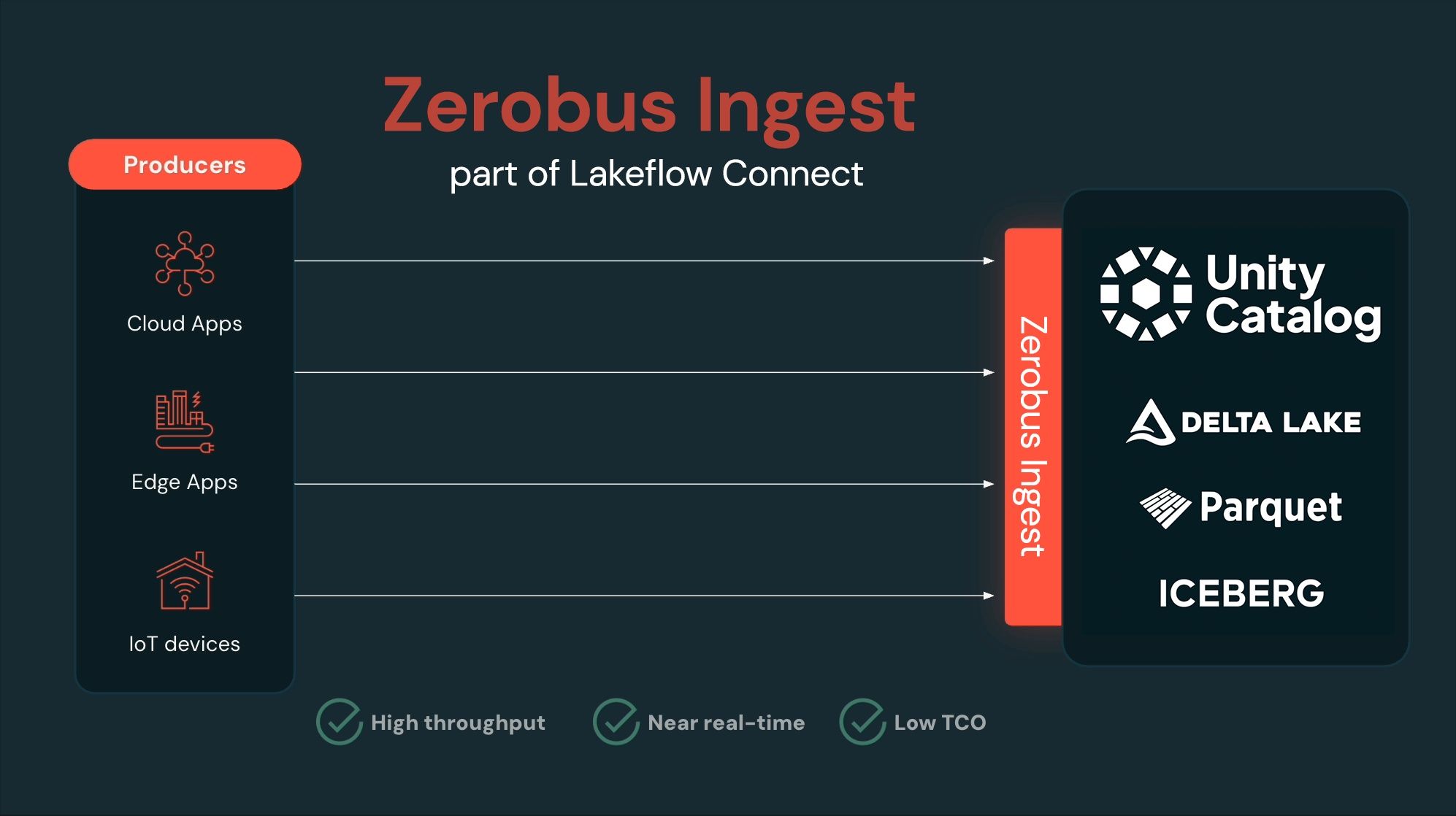
For years, the promise of real-time data has been a siren song for enterprises, often leading to complex, costly, and fragile architectures. That foundational challenge is what Databricks is aiming to dismantle with the general availability of ZeroBus Ingest, a core component of its LakeFlow Connect service. Announced on February 23, 2026, this serverless offering is engineered to stream data from enterprise message buses like Apache Kafka and Confluent Cloud directly into the Databricks Lakehouse, but with a critical twist: it requires zero ongoing infrastructure management.
The launch signals a strategic move to democratize access to real-time analytics. According to the announcement from databricks.com, the service is designed to eliminate the traditional burdens of provisioning, scaling, and monitoring streaming infrastructure. 'With ZeroBus Ingest, what used to take weeks of engineering effort now takes minutes,' the report states, framing it as a tool for both data engineers and platform teams seeking to accelerate data-driven initiatives without escalating operational overhead.
How ZeroBus Ingest Actually Works: A Technical Breakdown
At its core, ZeroBus Ingest functions as a managed connector. It establishes a secure link between a customer's existing Kafka or Confluent Cloud cluster and their Databricks Unity Catalog. The data flow is continuous and automated. Once configured, the service ingests data from specified topics, automatically schematizes it using schema inference or a user-defined schema, and writes it in near real-time to Delta tables.
A key technical differentiator highlighted by Databricks is its serverless nature. The company manages all the underlying compute resources, scaling them seamlessly to handle fluctuations in data volume. This abstracts away the need for teams to manage Kafka consumers, Spark clusters, or streaming jobs. The data lands in the Lakehouse in an open Delta format, immediately queryable by SQL, Python, or R, and ready for batch or real-time processing pipelines downstream. This architecture is intended to collapse the traditional separation between transactional messaging systems and analytical data stores.
The Tangible Benefits: From Cost to Simplicity
Moving Beyond the Hype to Operational Reality
The value proposition of ZeroBus Ingest is built on several concrete pillars. First is operational simplicity. By removing infrastructure management, it reduces the risk of pipeline failures and the associated 'pager duty' for on-call engineers. Databricks claims this leads to higher data reliability and team productivity.
Second is cost predictability. As a serverless service, customers are billed based on the volume of data ingested, not for perpetually running virtual machines or clusters that may be underutilized. This can translate to significant savings, especially for organizations with variable data streams.
Finally, it accelerates time-to-insight. The report emphasizes that because the data is instantly available in the Lakehouse, analytics and machine learning teams can work with fresher data. This can impact scenarios from dynamic pricing models and fraud detection to real-time customer experience personalization, where minutes or seconds of latency matter.
Integration and Governance: The Unity Catalog Connection
ZeroBus Ingest doesn't operate in a silo; its integration with Databricks' Unity Catalog is fundamental to its governance story. Every ingested topic becomes a managed table within the catalog, inheriting its unified security, auditing, and lineage capabilities.
This means access to the streaming data can be controlled with fine-grained permissions, and its journey from the message bus to the Delta table is automatically tracked. According to databricks.com, this provides 'end-to-end visibility and control,' addressing a major pain point in hybrid architectures where data governance often breaks down between systems. The centralized management through the Databricks platform interface is a deliberate design choice to unify the management plane for both batch and streaming data workloads.
Who Stands to Gain the Most?
Identifying the Primary Use Cases and Beneficiaries
The service appears tailored for specific organizational profiles. Large enterprises with established Kafka deployments for event streaming are prime candidates, as they can unlock the analytical value of that data without a major re-architecture. Platform engineering teams burdened with maintaining myriad connectors and pipelines are another key audience, as the service promises to offload that maintenance.
Furthermore, companies in sectors like financial technology, e-commerce, and IoT, where real-time event data is abundant and valuable, could leverage ZeroBus Ingest to shorten their analytics feedback loop. The announcement suggests it enables a 'batch and streaming coexistence' pattern, allowing teams to start with simple ingestion and later build more complex real-time applications on the same data foundation within the Lakehouse. This incremental adoption path lowers the initial barrier to entry for real-time analytics.
The Competitive Landscape and Strategic Implications
The general availability of ZeroBus Ingest places Databricks in more direct competition with cloud vendors' native streaming services and other data platform providers offering managed connectors. Its differentiation lies in the tight, managed integration with the entire Databricks Lakehouse ecosystem—particularly Unity Catalog, Delta Lake, and its compute engines—rather than being a standalone connector tool.
Strategically, it's a move to make the Databricks platform the inevitable, centralized hub for all enterprise data, regardless of its latency profile. By reducing the friction to bring high-velocity data into the Lakehouse, Databricks strengthens its position as a unified platform, potentially reducing the need for customers to use separate specialized databases for real-time analytics. The report's tone positions this not just as a product release, but as an elimination of a fundamental architectural compromise.
Potential Considerations and the Road Ahead
While the promise is significant, practical adoption will involve considerations. Organizations must evaluate the cost model of volume-based ingestion against their existing infrastructure costs. They must also ensure their network and security configurations allow for a secure connection between their Kafka cluster and the Databricks cloud service.
The announcement from databricks.com positions this as part of the broader LakeFlow Connect vision, indicating that more managed connectors for sources like databases and SaaS applications are likely on the roadmap. The success of ZeroBus Ingest will be measured not just by its technical performance, but by its ability to truly simplify the day-to-day reality of data engineering teams. Can it deliver on the promise of 'set it and forget it' for critical data pipelines? The market will now begin to answer that question in production environments.
A New Chapter for Real-Time Data Strategy
The general availability of ZeroBus Ingest represents more than a feature update; it's a statement about the maturation of cloud data platforms. The focus is shifting from merely providing powerful tools to actively reducing the total effort required to derive value from data. By tackling the infrastructure complexity of real-time ingestion, Databricks is addressing a legitimate bottleneck that has slowed down analytics initiatives across industries.
If the service delivers as described, it could recalibrate how architects and engineers approach system design. The question may evolve from 'How do we build a real-time pipeline?' to 'Why wouldn't we stream this data into the Lakehouse?' This subtle shift in mindset, enabled by managed services that remove undifferentiated heavy lifting, could be the most lasting impact of this announcement. As of February 2026, the tool is officially available, inviting organizations to test its premise: that real-time data should be a utility, not an engineering marathon.
#Databricks #RealTimeData #DataEngineering #Lakehouse #Serverless


