

Arcade Revival: This Custom Gaming PC Demands a Quarter to Power On

📷 Image source: cdn.mos.cms.futurecdn.net
A Nostalgic Toll for Modern Gaming
Blending retro arcade mechanics with high-end PC hardware
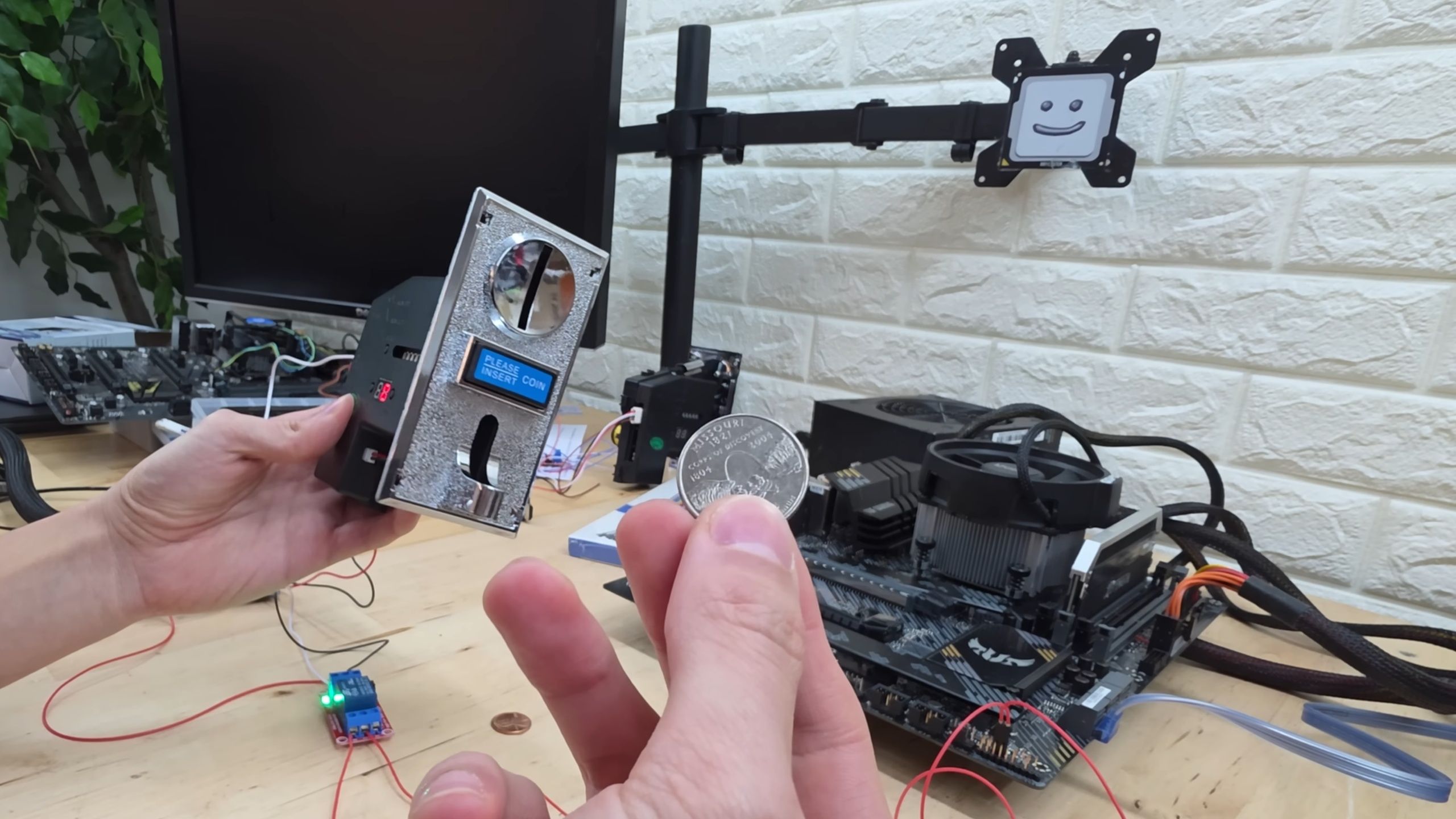
Remember the satisfying clunk of a quarter dropping into an arcade cabinet's coin slot? One PC modder has resurrected that tactile experience for the modern era, building a custom gaming rig that literally charges you 25 cents every time you want to turn it on. According to tomshardware.com, this unique project, dubbed the 'Quarter-Powered PC,' is a deliberate and playful nod to what the builder calls the 'oldest form of microtransactions.' It's a full-fledged gaming system locked behind a physical paywall, requiring a genuine U.S. quarter to complete the circuit and boot up.
The builder, known online as '98,' detailed the process in a forum post, explaining the motivation was to 'kick it old school.' The project isn't about monetization but about recapturing a specific feeling from the past. Every power-up becomes a small, intentional ritual, a far cry from the seamless, always-on nature of contemporary computers. The report from tomshardware.com highlights that the total cost for the modification tools and supplies came to approximately $135, not including the PC's core components or, humorously, 'a lifetime supply of quarters' needed to operate it.
Engineering the Pay-Per-Play Mechanism
How a simple coin slot governs a complex machine
The core technical challenge was integrating a purely mechanical 1980s-style arcade coin door with the digital logic of a modern ATX power supply. The builder sourced an authentic coin door, the kind once bolted to cabinets like Street Fighter II or Mortal Kombat. This isn't a sensor reading a QR code; it's a physical acceptor designed to validate the weight, size, and metallic composition of a U.S. quarter.
Internally, the coin door acts as a sophisticated switch. When a valid quarter is inserted, it trips a microswitch, sending a signal. The builder had to interface this signal with the PC's power button headers on the motherboard. As detailed in the build log, this likely involved a relay or a transistor circuit to translate the mechanical 'coin accepted' pulse into a momentary short of the two power switch pins, mimicking the press of a standard case button. The system remains secure, too—the coin door locks with a key, preventing unauthorized free play, just like a real arcade operator would.
The Build: Specs Behind the Gimmick
While the quarter mechanism is the star, the PC itself is no slouch. According to the specifications shared by the builder, it's built for serious performance. The heart of the system is an AMD Ryzen 7 7800X3D processor, a top-tier gaming CPU renowned for its massive cache. This is paired with an ASUS ROG Strix B650E-F Gaming WiFi motherboard, providing a robust foundation for the components.
For graphics, the builder chose an AMD Radeon RX 7900 XTX, placing this build firmly in the high-end gaming arena. It's housed in a Hyte Y60 case, known for its distinctive angled glass and showcase design, which perfectly complements the installed coin door. Cooling is handled by a Deepcool LT720 360mm liquid cooler, ensuring the powerful components stay quiet and cool under load. This juxtaposition is key—it's not a retro PC playing old games; it's cutting-edge hardware accessed through a retro interface.
Cost Analysis: Beyond the Quarters
Breaking down the investment in nostalgia
The financial aspect of the build has two distinct layers: the functional gaming PC and the modification itself. The core components—CPU, GPU, motherboard, case, cooler, RAM, and storage—represent a significant investment typical of any high-end gaming desktop, likely running into several thousand dollars.
The novelty cost, as reported by tomshardware.com, is the $135 for the 'tools and supplies' specific to the mod. This sum covers the vintage arcade coin door, wiring, electrical components for the interface circuit, and any custom fabrication materials needed to mount the door securely into the modern Hyte Y60 case. The builder's mention of a 'lifetime supply of quarters' is a wry joke, but it underscores the ongoing operational cost: about $0.25 per session. Over years of use, that could add up to a modest sum, all in physical currency that ends up stored inside the locked coin box.
A Commentary on Modern Gaming Economics
The project's description as restoring the 'oldest form of microtransactions' is a pointed, if humorous, piece of commentary. In the classic arcade model, payment was direct, transparent, and physical. You paid for a discrete session of play. Today's digital microtransactions—for loot boxes, cosmetic skins, or battle passes—are often abstracted, continuous, and can feel endless.
This PC mod makes the transaction tangible again. There's a clear, one-to-one relationship between payment (the quarter) and service (a gaming session). It reframes the act of paying to play as a deliberate, almost ceremonial event. According to the builder's philosophy shared in the post, it adds a layer of appreciation and intentionality that's missing from systems where games are simply always available in a digital library. It forces a moment of consideration: 'Is this session worth a quarter?'
The Practicalities and Quirks of Daily Use
Living with a PC that won't boot without cash
Adopting this system for daily use introduces unique practical scenarios. Forgetting your wallet now has a new consequence: you're locked out of your own computer. Sudden crashes or the need for a quick reboot become slightly more expensive and involved processes. The builder must also manage the accumulating coin haul, periodically unlocking the door to retrieve a pile of quarters.
There's also an inherent security through obscurity. A potential thief or an untrusted roommate couldn't simply press the power button; they'd need the specific key for the coin door or attempt to bypass a wired-in mechanical system. The mod also serves as an unconventional parental control or time-management tool. Once the coin box is empty, the gaming sessions are over until someone decides to reinvest, adding a natural, physical limit to playtime that software limits can sometimes fail to enforce.
The Art of Case Modding and Personal Expression
This project sits firmly within the creative tradition of PC case modding, where the computer's enclosure becomes a canvas for personal expression and technical ingenuity. While many mods focus on extravagant liquid cooling loops, intricate lighting, or themed artwork, this build centers on a novel user interaction. It prioritizes a unique experiential gimmick over visual spectacle, though the installed coin door certainly adds a striking visual element.
The build log on the forums, as referenced by tomshardware.com, shows a community engaged in problem-solving and appreciation. Other enthusiasts discuss the electrical engineering involved, suggest alternative coin mechanisms, or share their own nostalgia for the arcade era. It demonstrates that modding isn't just about achieving the highest benchmark scores; it's about building a machine that tells a story or evokes a specific feeling, making the act of using the PC part of the entertainment.
Legacy of the Arcade and Physical Media
In an age of digital downloads, cloud streaming, and subscription services, the Quarter-Powered PC is a monument to physicality. The arcade era was defined by shared social spaces, dedicated hardware, and direct payment. This PC mod captures a sliver of that ethos and transplants it into the personal computing domain. The quarter is a token, a physical object that mediates the digital experience.
The project, as documented on tomshardware.com on January 25, 2026, resonates because it touches on a shared cultural memory. For those who grew up feeding quarters into machines, the sound and action are instantly evocative. For younger users, it's a curious and novel interaction with tech history. It stands as a reminder that our interactions with technology are not just about efficiency and convenience; they can also be designed for novelty, reflection, and a tangible connection to the past, one coin at a time.
#GamingPC #PCMod #Arcade #RetroGaming #CustomBuild


