

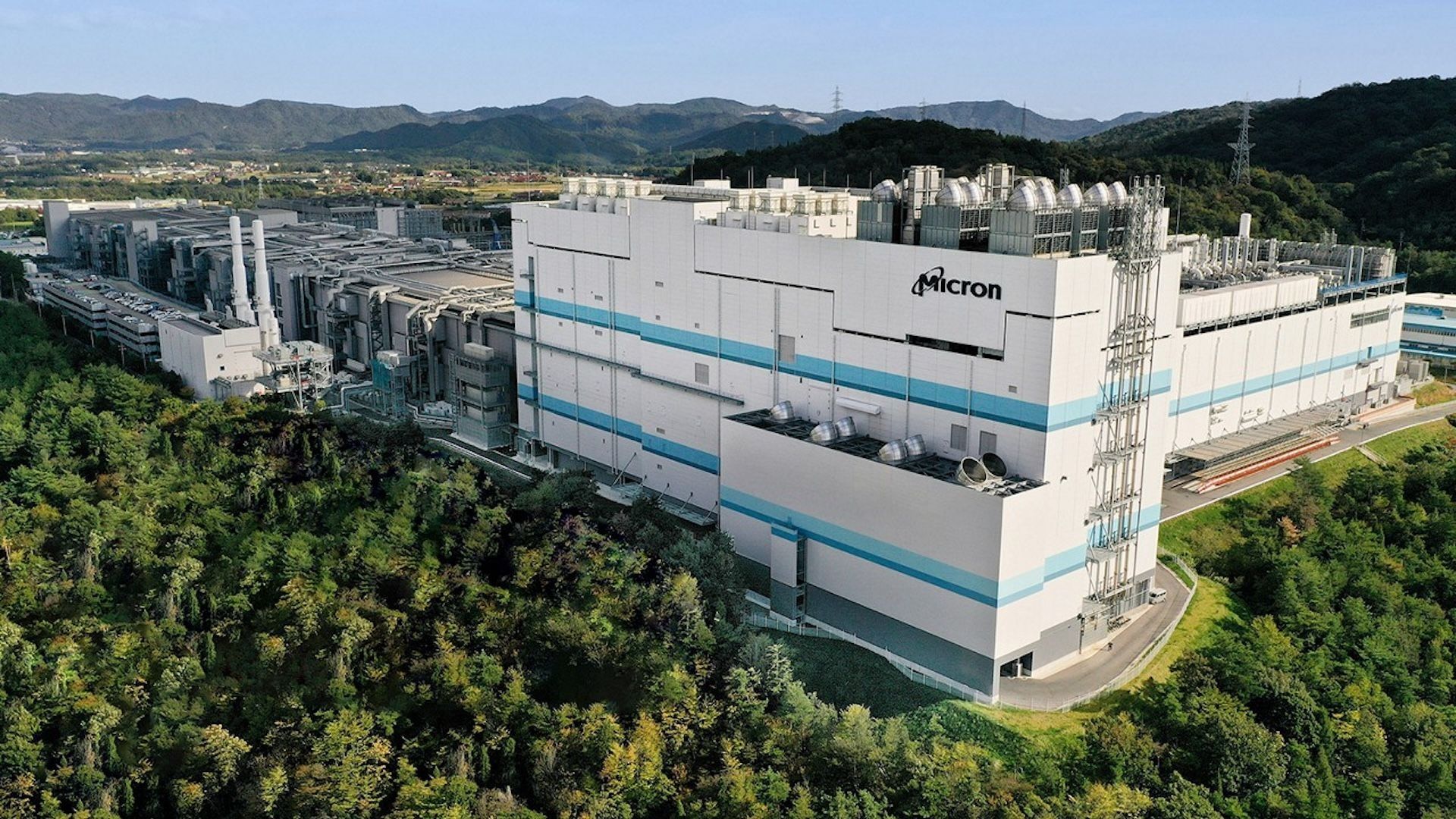
Micron Bets $9.6 Billion on Japanese HBM Production Amid Intensifying AI Memory Competition

📷 Image source: cdn.mos.cms.futurecdn.net
Strategic Expansion in Japan's Semiconductor Heartland
Micron's multi-billion dollar investment signals confidence in Japan's manufacturing ecosystem
According to tomshardware.com, Micron Technology has unveiled plans to construct a massive $9.6 billion high-bandwidth memory (HBM) fabrication facility in Japan. This strategic move comes as competition for artificial intelligence memory solutions intensifies globally, with manufacturers racing to meet exploding demand for advanced chips that power AI systems.
The decision to locate this substantial investment in Japan reflects the country's enduring strengths in semiconductor manufacturing and supply chain reliability. Industry analysts see this as a vote of confidence in Japan's technical workforce and infrastructure capabilities, particularly as companies seek to diversify production geographically amid global supply chain concerns.
High-Bandwidth Memory: The Engine of AI Acceleration
Understanding the critical role HBM plays in artificial intelligence workloads
High-bandwidth memory represents a specialized class of memory technology designed specifically for data-intensive applications like artificial intelligence and high-performance computing. Unlike conventional memory, HBM stacks multiple memory dies vertically using through-silicon vias (TSVs), creating dramatically higher bandwidth while occupying significantly less physical space.
This architectural advantage makes HBM particularly suited for AI training and inference workloads, where massive datasets must be processed rapidly. The technology's ability to deliver exceptional bandwidth—often exceeding 1 terabyte per second in current generations—enables AI accelerators to maintain peak performance without being bottlenecked by memory constraints. As AI models grow increasingly complex, the demand for higher-capacity, faster HBM continues to accelerate.
Manufacturing Timeline and Production Scale
Phased approach to bringing advanced memory production online
The report indicates that Micron plans to begin construction on the new facility in 2026, with mass production targeted to commence in the latter half of 2027. This timeline reflects the complexity of establishing cutting-edge semiconductor manufacturing operations, particularly for advanced memory technologies requiring specialized equipment and processes.
When fully operational, the Japanese fab will significantly expand Micron's HBM production capacity, though specific output volumes remain undisclosed. The scale of this $9.6 billion investment suggests it will represent a substantial portion of Micron's future HBM manufacturing footprint, positioning the company to compete more aggressively in the high-margin AI memory segment against established players like Samsung and SK Hynix.
Global AI Memory Market Dynamics
Intensifying competition as demand outstrips supply
The AI memory market has become increasingly competitive as technology companies worldwide scramble to secure sufficient HBM supplies for their AI accelerators and data centers. According to industry analysis cited by tomshardware.com, demand for HBM is expected to grow at a compound annual rate exceeding 50% through the end of the decade, creating persistent supply constraints despite massive capacity expansions.
This supply-demand imbalance has created a seller's market for HBM manufacturers, with premium pricing and allocation agreements becoming common. The situation has prompted multiple memory manufacturers to accelerate their HBM roadmaps and expansion plans, though building new fabrication facilities requires substantial capital investment and typically takes several years to reach volume production.
Japan's Semiconductor Renaissance
How government support and industrial policy are attracting major investments
Micron's decision to build its new HBM fab in Japan follows significant semiconductor investments from other global players, suggesting the country is successfully rebuilding its position in the global semiconductor ecosystem. The Japanese government has implemented aggressive support policies, including substantial subsidies for semiconductor manufacturing, to attract foreign investment and revitalize domestic chip production.
These efforts appear to be paying dividends, with multiple major semiconductor companies establishing or expanding manufacturing presence in Japan. The country offers several strategic advantages, including a highly skilled engineering workforce, established supply chains, and geographic proximity to other key Asian semiconductor markets and suppliers.
Technical Specifications and Next-Generation HBM
What the future holds for high-bandwidth memory technology
While specific technical details about the memory products to be manufactured at Micron's Japanese facility weren't disclosed in the report, industry trends suggest the fab will focus on producing HBM3E and subsequent generations. Current HBM3E products deliver bandwidth exceeding 1.2 terabytes per second with capacities up to 24 gigabytes per stack, but continued improvements are expected as AI models grow more demanding.
The evolution of HBM technology involves multiple technical challenges, including thermal management in stacked configurations, yield improvements for increasingly complex architectures, and power efficiency enhancements. Success in these areas requires close collaboration between memory manufacturers, equipment suppliers, and end customers to optimize performance characteristics for specific AI workloads and system architectures.
Supply Chain Implications and Regional Impact
How Micron's investment affects the broader semiconductor ecosystem
Establishing a major HBM manufacturing facility in Japan will have ripple effects throughout the regional semiconductor supply chain. According to industry experts, such projects typically require extensive networks of suppliers for everything from raw silicon wafers and specialty chemicals to advanced manufacturing equipment and testing instrumentation.
The concentration of HBM production capacity in specific geographic regions also raises questions about supply chain resilience, particularly given the critical role these components play in AI infrastructure. Some analysts suggest that geographic diversification of advanced memory manufacturing could help mitigate risks from regional disruptions, though the capital intensity and technical expertise required limit how quickly such diversification can occur.
Competitive Landscape Reshuffle
How Micron's move affects the balance of power in memory markets
Micron's substantial investment positions the company to potentially gain market share in the lucrative HBM segment, where Samsung and SK Hynix have historically dominated. The competitive dynamics in advanced memory markets have significant implications for pricing, innovation pace, and customer options across the AI ecosystem.
Memory manufacturers face the challenge of balancing massive capital investments against uncertain demand timelines and rapidly evolving technology standards. Companies that misjudge either technological trends or demand patterns risk being left with expensive, underutilized manufacturing capacity or missing major market opportunities. The current AI-driven memory boom represents both tremendous opportunity and significant execution risk for all participants in the space.
Long-Term Strategic Implications
What Micron's Japanese investment reveals about future industry direction
According to tomshardware.com, Micron's commitment to building a dedicated HBM fab in Japan signals the company's conviction that AI-driven memory demand represents a structural shift rather than a temporary boom. The scale and timing of the investment suggest Micron anticipates sustained strong demand for high-performance memory solutions as AI becomes increasingly embedded across computing applications.
This strategic direction also reflects the growing specialization within the memory market, where different memory technologies are optimized for specific use cases rather than serving as general-purpose components. The success of such specialized investments will depend on continued AI adoption across enterprise, cloud, and edge computing environments, as well as the ability of memory manufacturers to keep pace with the evolving requirements of AI hardware architectures.
#HBM #AI #Semiconductors #Micron #Japan


