

MikroTik Unleashes CRS812 DDQ: A New Era for 400GbE Networking

📷 Image source: servethehome.com
Breaking the 400GbE Barrier
MikroTik's latest switch redefines high-speed networking capabilities
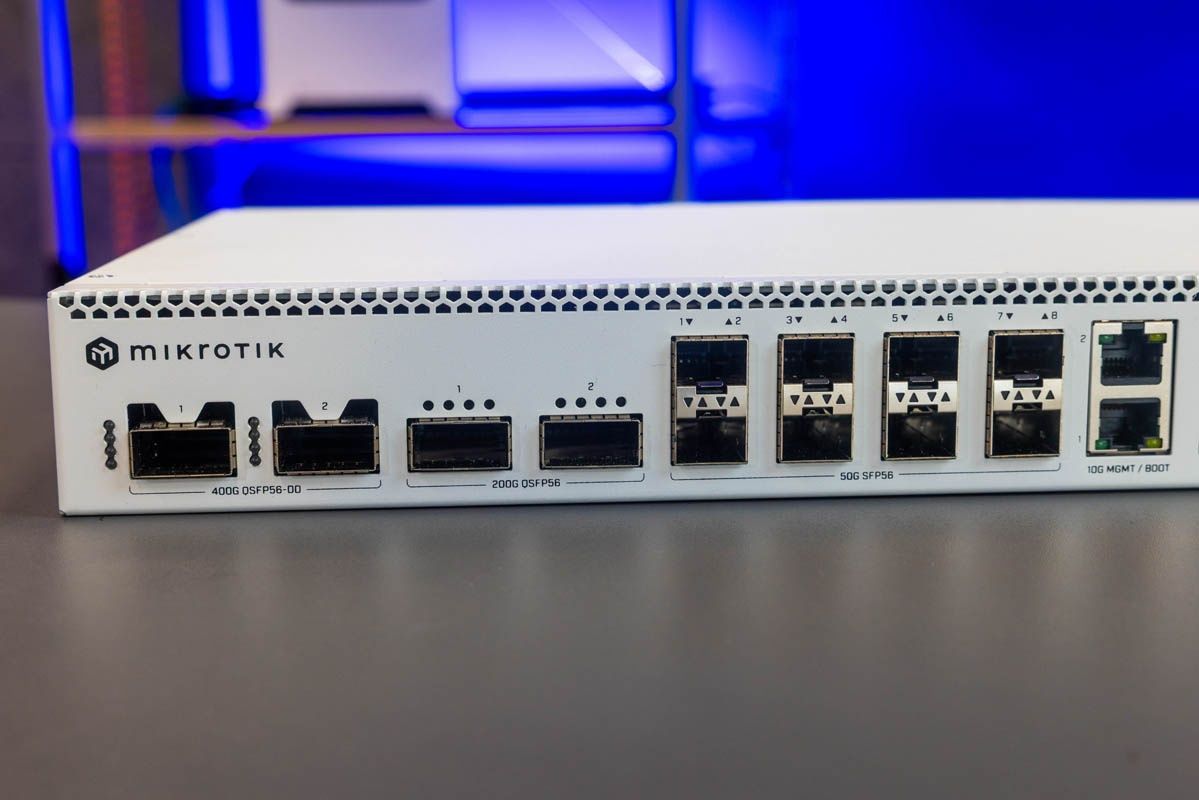
The networking landscape just shifted dramatically with MikroTik's introduction of the CRS812 DDQ 400GbE switch. According to servethehome.com, this new hardware represents a significant leap forward in switching technology, bringing enterprise-grade 400GbE capabilities to a broader market. The CRS812-8DS-2DQ-2DDQ model designation hints at the sophisticated port configuration that sets this switch apart from previous generations.
What makes this launch particularly noteworthy is the timing. As data demands continue to explode across industries, the need for faster backbone connections has become increasingly critical. The CRS812 DDQ arrives precisely when organizations are grappling with how to handle massive data transfers without creating network bottlenecks that could hamper productivity and innovation.
Port Configuration and Physical Design
Understanding the hardware architecture behind the performance
According to servethehome.com's detailed analysis, the CRS812 DDQ features a carefully engineered port arrangement that balances different speed requirements. The switch includes eight 25GbE SFP28 ports, two 100GbE QSFP28 ports, and two 400GbE QSFP-DD ports. This mixed configuration allows for flexible deployment scenarios where different segments of a network might require varying bandwidth levels.
The physical design follows MikroTik's established aesthetic while accommodating the thermal requirements of high-speed components. The inclusion of both QSFP28 and QSFP-DD ports demonstrates MikroTik's understanding that network upgrades often happen gradually, requiring backward compatibility with existing infrastructure while providing pathways to future technologies.
Marvell Prestera CX 8590 Switching Silicon
The powerful engine driving the performance
At the heart of the CRS812 DDQ lies the Marvell Prestera CX 8590 switching silicon, which servethehome.com identifies as the key component enabling the switch's advanced capabilities. This chipset represents Marvell's latest innovation in networking processors, specifically designed to handle the demanding requirements of 400GbE switching while maintaining power efficiency.
The Prestera CX 8590 brings sophisticated traffic management features that ensure optimal performance even under heavy loads. How does this translate to real-world performance? Network administrators can expect consistent throughput with minimal latency, crucial for applications requiring real-time data processing or supporting high-frequency trading environments where microseconds matter.
Target Applications and Use Cases
Where this switch delivers maximum impact
Servethehome.com's coverage suggests several primary applications for the CRS812 DDQ. Data center interconnects represent one obvious use case, where the 400GbE ports can handle spine-leaf connections or aggregate traffic from multiple lower-speed switches. Research institutions and universities working with large datasets will find the high-speed capabilities particularly valuable for transferring massive research files between facilities.
Content delivery networks and cloud service providers represent another natural fit. The ability to handle multiple 400GbE connections means these organizations can reduce the physical complexity of their network architecture while increasing overall capacity. For broadcast and media companies dealing with 8K video streams and high-resolution content, the switch provides the backbone necessary for seamless production workflows.
Power and Thermal Considerations
Managing the demands of high-speed switching
High-performance networking equipment inevitably brings power and cooling challenges, and the CRS812 DDQ appears designed with these considerations in mind. While servethehome.com didn't provide specific power consumption figures, the publication noted that the switch's design addresses thermal management through careful component placement and ventilation.
The move to 400GbE typically increases power requirements compared to lower-speed alternatives, but advances in semiconductor technology have helped moderate these increases. Network planners considering the CRS812 DDQ will need to factor in both the direct power consumption and the associated cooling requirements when evaluating total cost of ownership and infrastructure readiness.
Market Positioning and Competitive Landscape
Where MikroTik fits in the 400GbE ecosystem
According to servethehome.com's industry perspective, MikroTik has traditionally occupied a unique position in the networking market, offering robust features at accessible price points. The CRS812 DDQ continues this strategy by bringing 400GbE capabilities to price-sensitive segments that might otherwise struggle to afford similar technology from established enterprise vendors.
This positioning could prove particularly disruptive in educational institutions, research facilities, and growing technology companies that need high-performance networking but operate within constrained budgets. By offering a pathway to 400GbE without the premium pricing of some competitors, MikroTik potentially expands the addressable market for this cutting-edge technology.
Software and Management Capabilities
Beyond hardware: the complete solution
While hardware specifications grab headlines, the software and management features often determine real-world usability. Servethehome.com indicates the CRS812 DDQ runs MikroTik's RouterOS, providing a consistent management experience for administrators already familiar with the company's ecosystem. This continuity reduces the learning curve and simplifies integration into existing MikroTik environments.
RouterOS brings comprehensive feature sets including advanced routing protocols, firewall capabilities, and quality of service controls. The question for potential adopters becomes: does the software maturity match the hardware advancement? Organizations evaluating the switch will need to consider whether RouterOS provides the specific management tools and automation capabilities required for their operational workflows and security policies.
Future Implications and Industry Direction
What the CRS812 DDQ signals about networking's evolution
The launch of the CRS812 DDQ represents more than just another product introduction—it signals the continued democratization of high-speed networking technology. As servethehome.com observes, 400GbE is transitioning from exclusive enterprise territory to broader availability. This trend suggests we're approaching an inflection point where 400GbE becomes the new standard for network backbones, much as 100GbE did in previous years.
What does this mean for network planning and infrastructure investment? Organizations now have clearer migration paths from existing 100GbE deployments, with the CRS812 DDQ serving as a bridge technology that supports both current and future speed requirements. The mixed port configuration acknowledges that network upgrades rarely happen overnight, providing the flexibility needed for gradual transitions that minimize disruption while maximizing future readiness.
Availability and Deployment Considerations
Practical aspects of implementing the new switch
While servethehome.com reported the product launch, specific availability timelines and pricing details weren't provided in their coverage. Organizations interested in the CRS812 DDQ will need to monitor MikroTik's official channels for purchasing information and delivery estimates. The typical deployment considerations for high-speed switches apply here, including compatibility with existing transceivers, cable infrastructure requirements, and staff training needs.
For many potential adopters, the decision will come down to timing—is now the right moment to invest in 400GbE technology, or would waiting for broader ecosystem maturity provide better value? The CRS812 DDQ's mixed port configuration does offer some protection against premature obsolescence, allowing organizations to deploy 400GbE where immediately beneficial while maintaining compatibility with existing 25GbE and 100GbE equipment until broader upgrades make sense.
#MikroTik #400GbE #Networking #DataCenter #Marvell #Switch


