

The Evolution of NASA Glenn's Visualization Lab: A Legacy of Innovation

📷 Image source: nasa.gov
From Humble Beginnings to Cutting-Edge Visualization
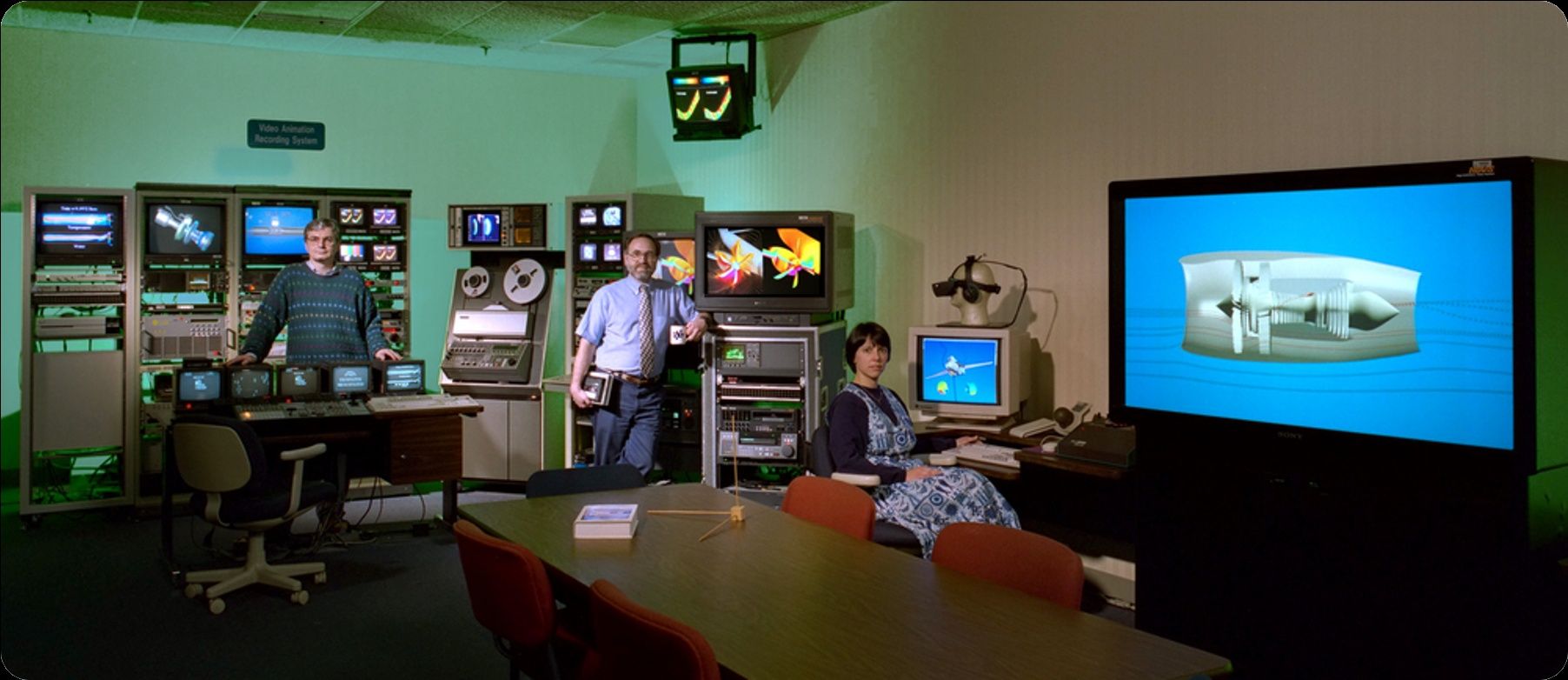
What began as a modest imaging project in the early 1990s has grown into one of NASA's most sophisticated visualization laboratories. The Glenn Research Center's Graphics and Visualization Lab (GVIS) has quietly shaped space exploration for three decades, transforming raw data into breathtaking visual stories that propel scientific discovery.
The Birth of a Vision
In 1991, a small team at NASA's Lewis Research Center (now Glenn) recognized an untapped potential. As supercomputers grew more powerful, they saw an opportunity to translate complex aerospace data into visual formats researchers could intuitively understand. The original GVIS facility occupied just 400 square feet, housing a single Silicon Graphics workstation that cost nearly $250,000 - a staggering investment at the time.
Milestones in Scientific Visualization
The lab's breakthrough came in 1994 with its first major project: visualizing computational fluid dynamics for the National Aero-Space Plane program. By converting numerical wind tunnel data into dynamic flow animations, engineers could spot turbulence patterns invisible in spreadsheets. This success established GVIS as NASA's go-to resource for making abstract data tangible.
Rendering the Future
When the International Space Station entered development, GVIS created detailed 3D models that helped engineers identify potential design conflicts years before assembly began. Their visualizations became so accurate that astronauts reported the virtual environments matched reality "down to the last bolt."
The Immersive Revolution
GVIS leapt ahead in 2007 by adopting CAVE (Cave Automatic Virtual Environment) technology - a room-sized cube where researchers don 3D glasses to walk through their data. This allowed scientists to literally step inside jet engine simulations or examine plasma formations from all angles. The lab's current 4K resolution system provides clarity finer than human eyesight.
Today, GVIS supports nearly every NASA mission, from modeling Mars landings to simulating nuclear thermal propulsion. Its team of computer scientists, engineers, and artists continue pushing boundaries, recently developing real-time VR tools that let researchers manipulate complex datasets with hand gestures.
Training the Next Generation
Beyond research, GVIS plays a crucial educational role. The lab's stunning visualizations appear in museums worldwide and help train astronauts. Perhaps most importantly, their work inspires future scientists - transforming esoteric equations into visual poetry that sparks young imaginations about space exploration's possibilities.
#NASA #SpaceTech #ScientificVisualization #GVISLab #3DModeling


